

Just three months after independence, in November 1947, when a conference of Chief Ministers was held in Delhi, concern was expressed about the Rashtriya Swayamsevak Sangh and it was asked to keep an eye on the activities of the Sangh. In a letter written to the Chief Minister of United Province, Govind Ballabh Pant, Prime Minister Jawaharlal Nehru clearly wrote that we will soon take action against the Sangh. Similarly, Madras Home Minister P. Subbarayan was suggested to ban the Sangh. However, he also wrote that there is no need to ban the meetings of Muslim League, Muslims are scared today, so it is very difficult to create any problem. On January 29, a day before Gandhiji’s assassination, Pandit Nehru had heated up the atmosphere by saying, “I will completely eradicate the Sangh from the soil of India.”
To this statement of Nehru early in the morning in a school in Madras, Sangh chief Guru Golwalkar replied, “The Sangh did not arise due to anyone’s kindness or mercy, so anyone’s opposition cannot end our work.” The Sangh’s mission did not get its strength from any resolution written on paper, nor will it end from instructions given on anyone’s paper.
In fact, Guru Golwalkar was realizing that the opponents were not liking the suddenly increasing strength of the Sangh and its cooperation with the army and the local administration in helping the refugees during the partition. Congress, Communists and Muslims have come against him. There were riots going on at that time and the blame for it was also being put on the Sangh. There were separate statements by Gandhiji, Nehru and Sardar Patel that the Sangh should be merged with the Congress. But the Sangh was not in favor of being political.
Message of ‘we are more than five hundred’
Guru Golwalkar had then given an address like today’s Sarsanghchalak Mohan Bhagwat, that every person living in India is our own. He had said, “If we think calmly, we will find that human life is full of experiments. Success-failure, victory-loss, happiness-sorrow are there in everyone’s life. Sufficient time should be given to any experiment to see whether it is successful or not, otherwise it will be injustice to the experimenter. We should remain calm and keep doing our work, regardless of what is happening, whether it is going well or not. It is important that we do not forget about our current problems. Do not let any feeling of hatred or vengeance grow in your heart, and keep walking patiently on the path of nation building. After all, they are the people of our society, they have also done good things, if we do not show them kindness, then we should not be worried about them.
He also said, “Let us put aside those differences which are once again raising their ugly heads. Let us remember the motto of unity – ‘Vayam Panchadhikan Shatam’ – and resolve to use all our strength to build a homogeneous nation. We should have no objection even if we have to sacrifice our lives to accomplish this great task”.
Instructions not to plant branches for 13 days
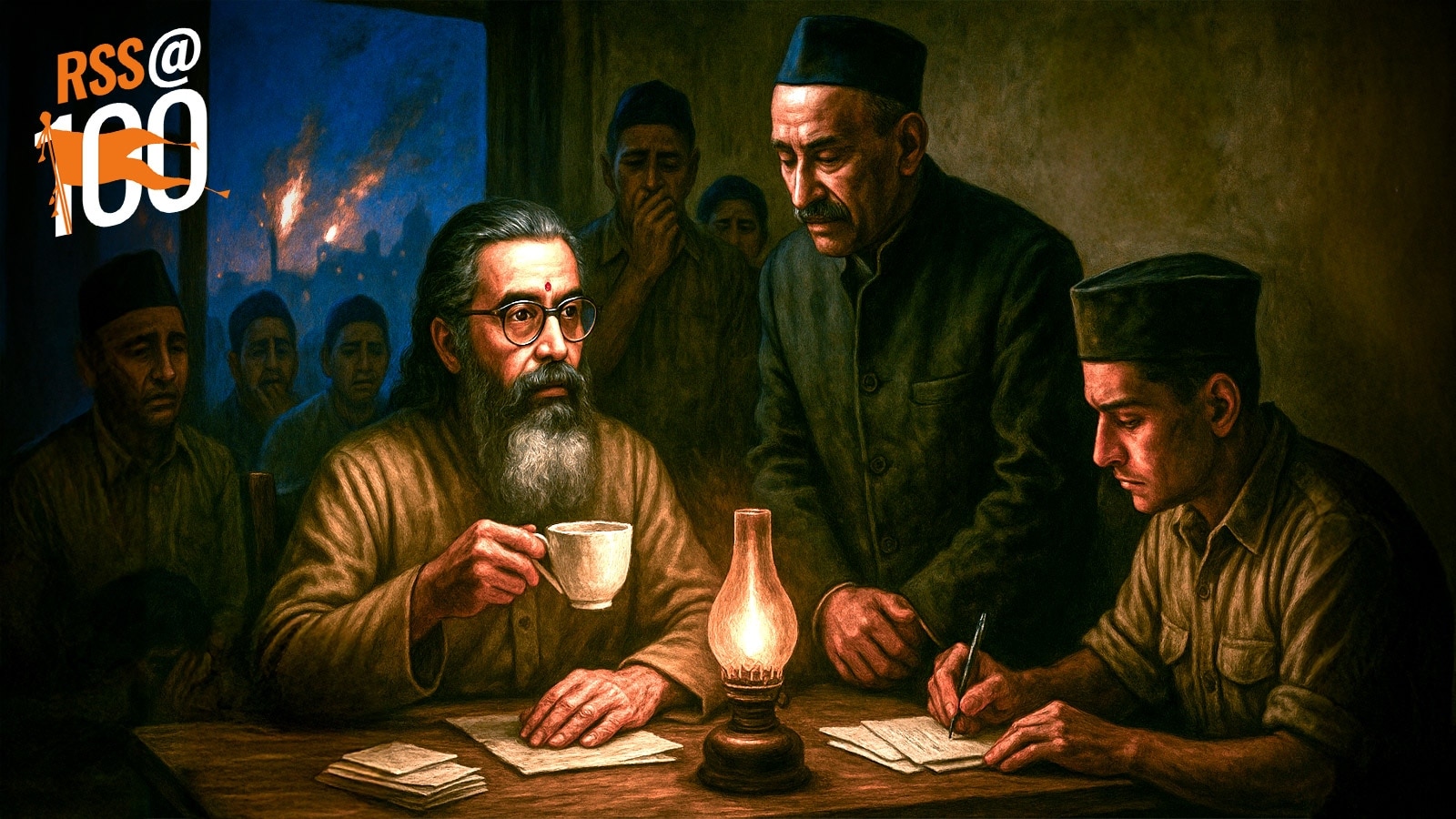
Despite this address, Guru Golwalkar had to give a strong statement to his opponents the morning after Nehru’s statement, i.e. on the day of Gandhi’s assassination, the reason for this was that it is not wise to remain silent when someone is talking about annihilating the existence. But it was his misfortune that after speaking on Pandit Nehru’s statement in Madras, when Guru Golwalkar was meeting with prominent people there in the evening, a bad news came. Guru Golwalkar had a cup of tea in his hand, but he could not even take a sip. Someone informed that someone had shot Gandhiji dead during the prayer meeting at Birla Bhawan. Everyone was stunned, Golwalkar put down his cup of tea and got lost in thoughts. After a long time he just said, “What a misfortune this is for the country.”
Canceling his further stay, he immediately left for Nagpur. Before leaving, he sent three telegrams as a condolence message, one to Pandit Nehru, the second to Sardar Patel and the third to Gandhiji’s son Devdas Gandhi. Also directed that no branch will be established in the country for the next 13 days. As soon as he reached Nagpur, he immediately wrote a letter each to Pandit Nehru and Sardar Patel.
Every story of this special series related to hundred years of RSS
He also issued a message to the media, in which, along with expressing grief over the assassination of Gandhiji, the Sangh volunteers were advised to exercise restraint in any situation. But no media published it. The signs were clearly visible. Meanwhile, information also started coming in from all over the country that all the anti-Sangh forces have united and started turning people’s sentiments against the Sangh and the government also got support in this. In Maharashtra this opposition was transformed into Brahmin and non-Brahmin.
‘Attack’ on both RSS leaders
Volunteers were the target across the country. On February 1, the tomb of Dr. Hedgewar was vandalized in Reshimbagh. As soon as night fell, the house of Sangh chief Golwalkar was surrounded by a mob armed with weapons. Stone pelting started at his residence. Bala Saheb Deoras (third Sarsanghchalak) was present inside with some of his comrades, but Guru Golwalkar asked him to fight against the crowd. He refused to take action and said, “I do not want the blood of my own countrymen to be shed in front of my house in the name of my security. No one needs my security, you can go home.”
By then the information about this attack reached Central Province Home Minister DP Mishra. He writes in his book ‘The Nehru Epoch: From Democracy to Monocracy’ that to save the lives of Guru Gowalkar and 40 volunteers, I had ordered their arrest. Whereas Bhishikar’s book ‘Shri Guruji’ also tells that police was deployed there during the day, but they went back from there in the evening. Here Guruji also addressed a condolence meeting organized for Gandhiji at Chitnis Park. After that when he returned, the volunteers advised him not to stay here but to go to some other safe place, but Guru Golwalkar rejected their proposal and asked him to go home and went inside for the evening. The volunteers stayed and then the crowd came. At midnight the police came, showed them the warrant, arrested them and took them away.
They took him away on the pretext of saving his life and put ‘Dafa 302’ on him.
related news
DP Mishra had claimed that he had ordered Guru Golwalkar to be taken to the police station as a precautionary measure to save his life, but in the warrant he was accused of murdering Gandhiji. After reading it, a slight smile appeared on Golwalkar’s face. While going with the police, he told the Sangh volunteers present that. “The clouds of doubt will soon be removed and we will be free from this stigma…till then remain patient…” Section 302 of murder and section 120B for conspiracy to murder were imposed on the Sangh chief. Then a one-line telegram message from Bhaiyaji Dani was sent to all the branches, “Guruji interned, be calm at all costs.”
The next day i.e. on 2 February, the government issued an ordinance, under which all the activities of the Sangh were declared illegal. Two days later, on February 4, an official ban on the Sangh was also announced. Along with that, arrests of Sangh workers were also started across the country. More than 30 thousand volunteers were arrested in the first two-three days.
On 5 February 1948, when his lawyer friend Dattopant Deshpande reached the jail to meet Guru Golwalkar, he sent a statement to him so that it could be published in the media. In this statement, Guru Golwalkar had written that the Sangh has always believed in the rule of law and has been working within the ambit of the law. Now that the government has declared the union illegal, it would be best to dissolve its executive as long as the union remains banned. At the same time, we deny all the allegations against the Sangh.
Interestingly, this statement of Guru Golwalkar was first published not by any Indian newspaper but by Pakistani newspaper ‘Dawn’ in its February 6 issue. In fact, all the wires were stopped by the government in Nagpur itself, yet the statement was conveyed to the people in different ways, some newspapers published it here the next day.
Filmy meeting of DIG with Golwalkar in jail
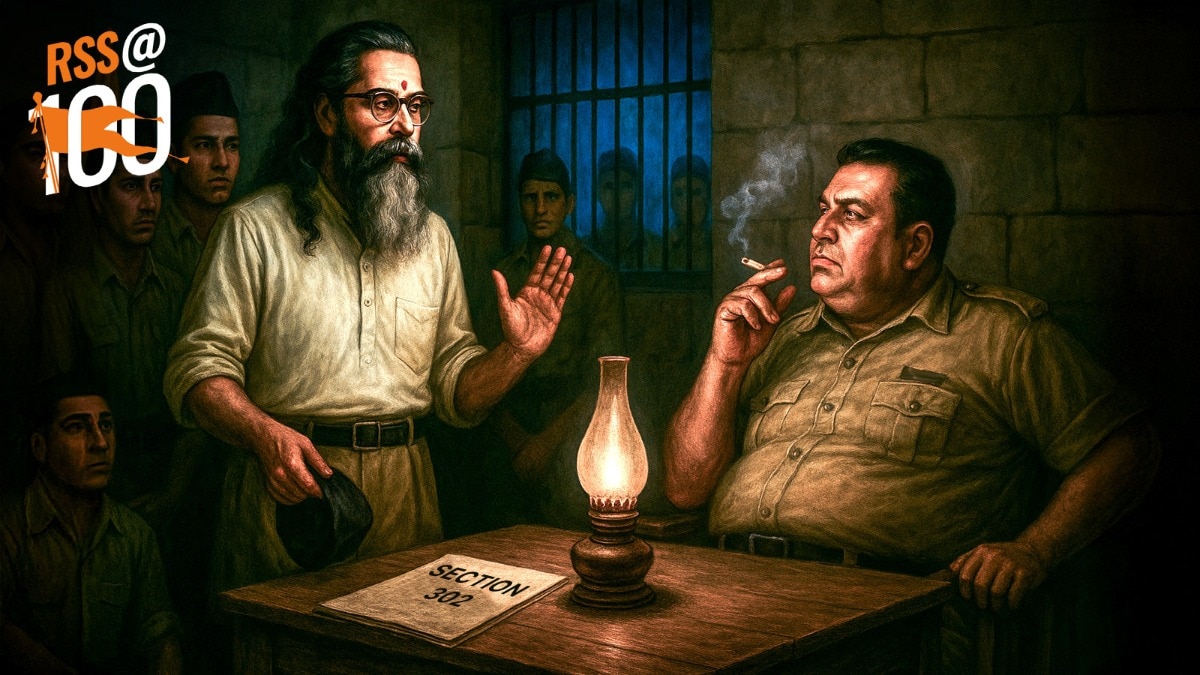
This meeting was truly filmy. There was style in it, and dialogues too. DIG Hiranchad Jain reached the jail and ordered the jailer to bring Guru Golwalkar before him. DIG Jain was a very big man, he thought that Guru Golwalkar would be shocked if such a big allegation was made. Before they came, he placed his feet on the table and started smoking his cigarette in style. As soon as Golwalkar came, he looked from top to bottom in a taunting manner and said, “Oh… so you are Guru Golwalkar… Sarsanghchalak… you look very thin and weak.” Golwalkar immediately scolded Nahle, “Dr. Hedgewar had not thought about the requirement of any size for the Sarsanghchalak, otherwise he would have made you or any buffalo the Sarsanghchalak.” As soon as he saw Guru Golwalkar’s attitude, the DIG immediately realized who he was talking to, behind whom were crores of volunteers.
He immediately ordered the jailer to go and bring a chair for Guruji. Then he started asking questions about Gandhi’s assassination, in response to which Golwalkar said that he would answer in the court. It was also said that Sardar Patel and Pandit Nehru will also have to come to the court. By then the government had also understood that they had nothing against the Sangh and after just 3 days, sections 302, 120B etc. were removed against Guru Golwalkar. But National Security Act was imposed on them. So that he can be kept in jail without trial.
Volunteers across the country started going to courts against keeping themselves in jail, and they started getting released. In many cases, even the government started imposing fines for illegal arrests. Regarding this, on May 4, Sardar Patel himself wrote a letter to Nehru informing him that the courts have not only released many such people in UP and Bombay province, but we have even been asked to pay the court expenses, we are being accused of violation of civil liberties.
Sardar Patel’s clean chit to Sangh
However, Sardar Patel’s letter to Pandit Nehru dated 27 February had made it clear that the Sangh had no role in Gandhiji’s assassination. In this he writes that, there is no doubt that RSS has no connection with this massacre. Investigation has revealed that this conspiracy was limited to only 10 people. Of which all except 2 have been caught. We get anonymous information regarding the Gandhi assassination, out of which 90 percent turns out to be false, but on the basis of that information we arrest Sangh volunteers, the central and state governments are accused of putting innocent people in jail. Despite this, Pandit Neh in Wardha Ru gave a statement that, “Mahatma Gandhi was murdered by the RSS itself. This murder is the result of the ideology of the Sangh. I am ready to leave power and enter the field to counter this Sangh.”
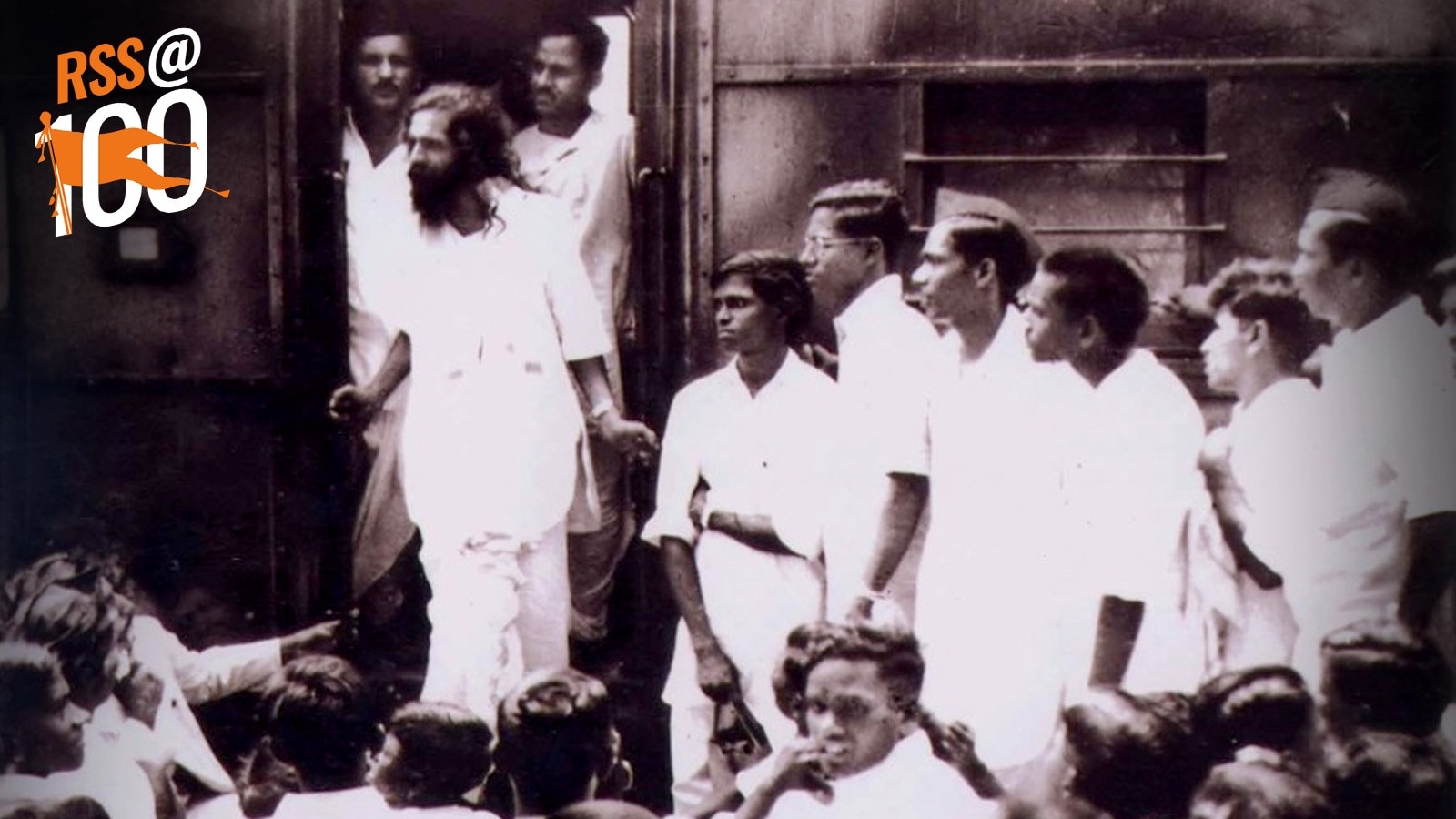
The period of NSA on Golwalkar was ending in 5-6 August. Patel did not take him further and Guru Golwalkar came out. Many conditions were imposed on him that he would not go out of Nagpur and would not give any statement to the press. Will not give speech in any meeting etc. But the battle to lift the ban on the Sangh was still a long one.
Previous story: The story of the first four pracharaks of RSS, Hedgewar’s ‘Akshar Shatru’ led the way
Next story: RSS organized, Sardar Patel chief guest and Congress government banned the program
—- End —-