

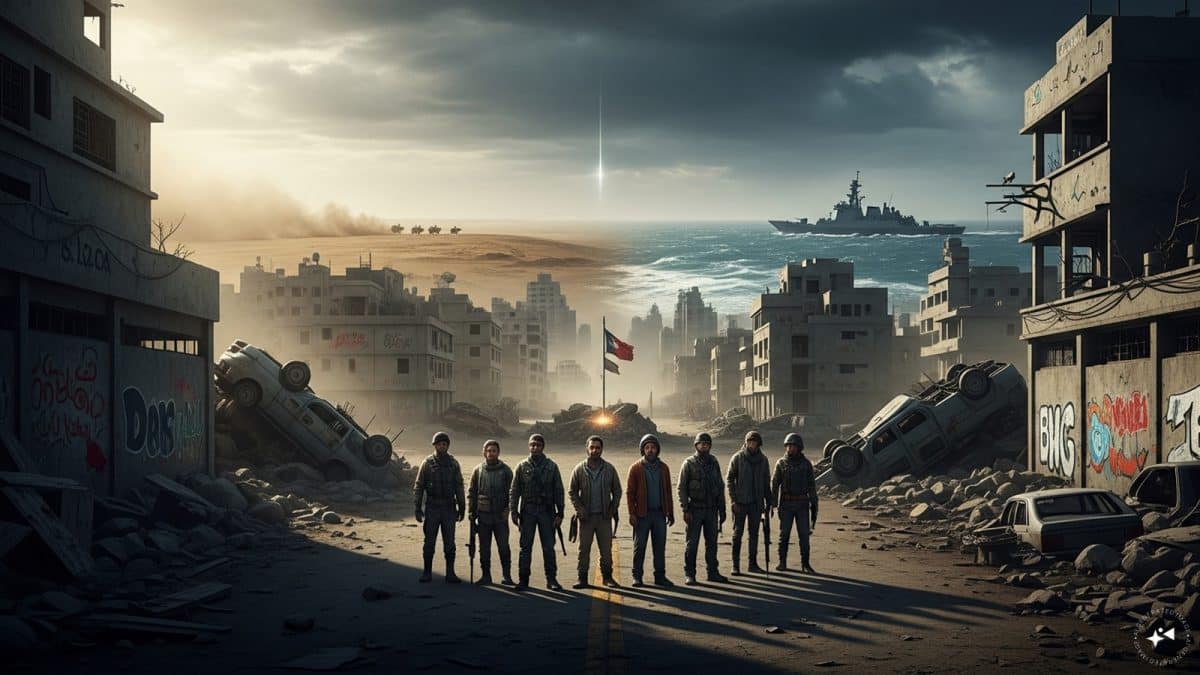
2025 ended with global stability fractured by mutinies, civil unrest and tentative pauses in conflict rather than a return to order. Across the Sahel, Haiti and the Taiwan Strait, armed actors tested the limits of fragile governments as world powers swapped multilateralism for harder-edged deterrence and security pacts.
While local ceasefires offered brief moments of hope, the overarching narrative remained one of deepening insecurity and a steady erosion of the international status quo.
STORY CONTINUES BELOW THIS AD
Sahel & Africa: Coups harden into regimes
In Africa, 2025 saw military takeovers evolve from temporary disruptions into established governance. The “Alliance of Sahel States” (Mali, Burkina Faso, and Niger) solidified their exit from ECOWAS, turning toward security partnerships with Russia.
Madagascar: On October 12, 2025, elite units of the CAPSAT overthrew President Andry Rajoelina following weeks of youth-led protests over energy crises. Colonel Michael Randrianirina was sworn in as President, dissolving the Senate and High Constitutional Court.
Benin: In December 2025, a coup attempt led by Lieutenant Colonel Pascal Tigri was thwarted after a 45-minute battle at the presidential residence in Cotonou. President Patrice Talon remained in power, but the incident highlighted deep instability following controversial constitutional amendments.
Sudan: Remains the world’s most devastating conflict zone, with 12 million people displaced as the war between the army and the RSF reached a “violent fracture” with no clear end in sight.
Haiti: Gang rule vs. the transition
Haiti spent 2025 on the edge of total collapse. Armed gangs now control over 90% of Port-au-Prince, with nearly 1.4 million people internally displaced.
Gang Suppression Force (GSF): In September 2025, the UN Security Council passed Resolution 2793, replacing the struggling Kenya-led mission with a more robust “Gang Suppression Force.” This new force is five times the size of its predecessor, with a 12-month offensive mandate.
Humanitarian Crisis: Over 4,300 people were killed in the first nine months of the year alone, and more than half the population faces acute food insecurity.
STORY CONTINUES BELOW THIS AD
Nepal: The “Gen Z” uprising
One of the most startling political shocks of 2025 came from Nepal, where a leaderless “Gen Z” uprising toppled the government after a sweeping social media ban backfired. The crisis escalated rapidly after authorities suspended 26 major platforms on 4 September in what many saw as an attempt to muzzle dissent over corruption and nepotism, sparking youth‑led protests that culminated in the storming and torching of the Federal Parliament Building and other key institutions in Kathmandu on 9 September.
The Fall: Following the “Storming of the Parliament” on September 9, where the Federal Parliament Building was torched, Prime Minister K.P. Sharma Oli was forced to resign. Oli subsequently fled to Dubai for medical treatment.
The Transition: In a historic first, Sushila Karki (former C