

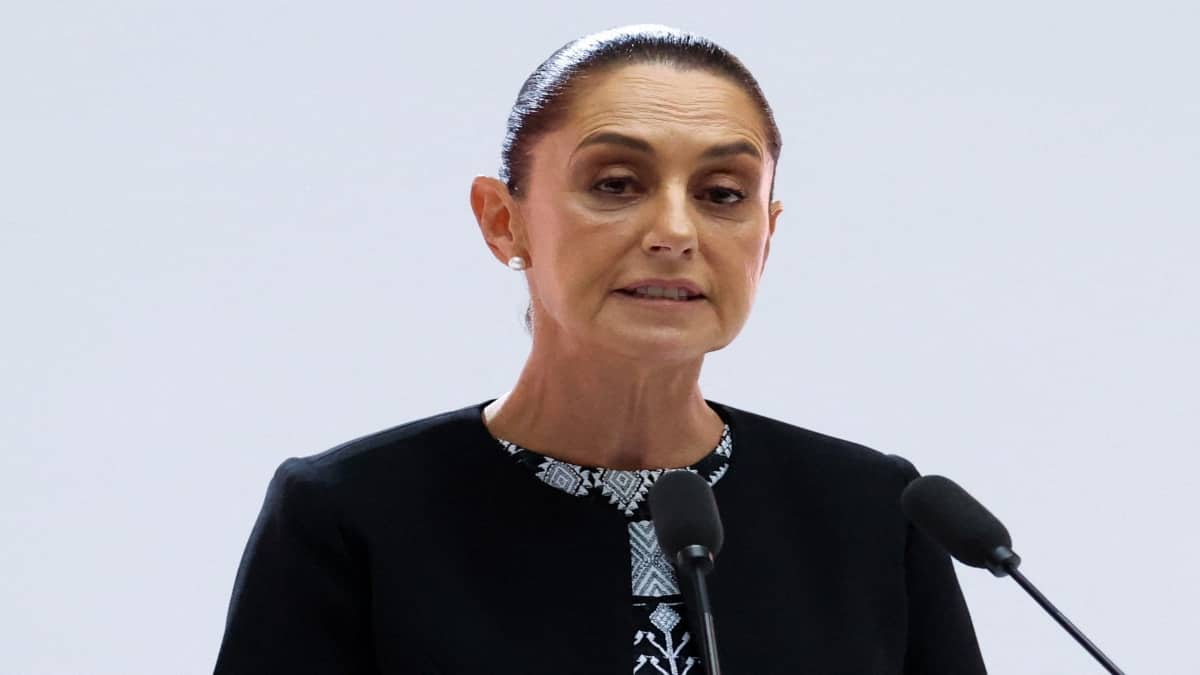
The government plans a 13% minimum wage hike starting January and aims to gradually cut the standard work week from 48 to 40 hours by 2030 to boost workers’ earnings and reduce long hours
Mexico on Wednesday announced that it will raise the minimum wage next year and pursue a reduction of the country’s long work week, marking the latest effort by the left-leaning government to boost earnings for workers in Latin America’s second-largest economy.
According to a Reuters report, Labor Minister Marath Bolaños said the minimum wage will increase by 13% starting in January, reaching 315.04 pesos ($17.27) per day under an agreement reached between labour groups, business leaders and the government.
STORY CONTINUES BELOW THIS AD
The daily wage, however, will increase to about 440.87 pesos in parts of northern Mexico near the border with the United States, where wages are higher.
President Claudia Sheinbaum said the 2026 hike will bring the cumulative increase in minimum wages to 154% since 2018, reported Reuters.
Sheinbaum, who has been in office for just over a year, has continued the aggressive wage-raising policy of her predecessor, Andrés Manuel López Obrador, arguing that the increases have played a key role in reducing poverty across the country.
More from World
Concerns about the economy
Sheinbaum said the decision followed consultations with the finance ministry, the central bank and business leaders.
She dismissed criticism that another double-digit increase would fuel inflation, arguing that the measure would not harm consumers or drive prices higher.
“For years it was said that the minimum wage couldn’t go up, that it would cause inflation, that there would no longer be investment in the country, foreign investment — and we are at a record level of foreign investment,” Reuters quoted Sheinbaum as saying during the conference.
Some analysts, as well as Central Bank Deputy Governor Jonathan Heath, have warned that bringing the minimum wage too close to the median salary could fuel inflation, even though annual headline inflation is currently within a percentage point of the bank’s 3% target, after a series of interest-rate cuts since early 2024.
The measure comes after Mexico’s economy contracted 0.3% in the third quarter, as a slowdown in industrial activity drove the economy’s first year-on-year quarterly decline since 2021.
Mexico’s economy has been weighed down by the impact of US President Donald Trump’s on-again, off-again tariffs and uncertainty over the upcoming review of the United