

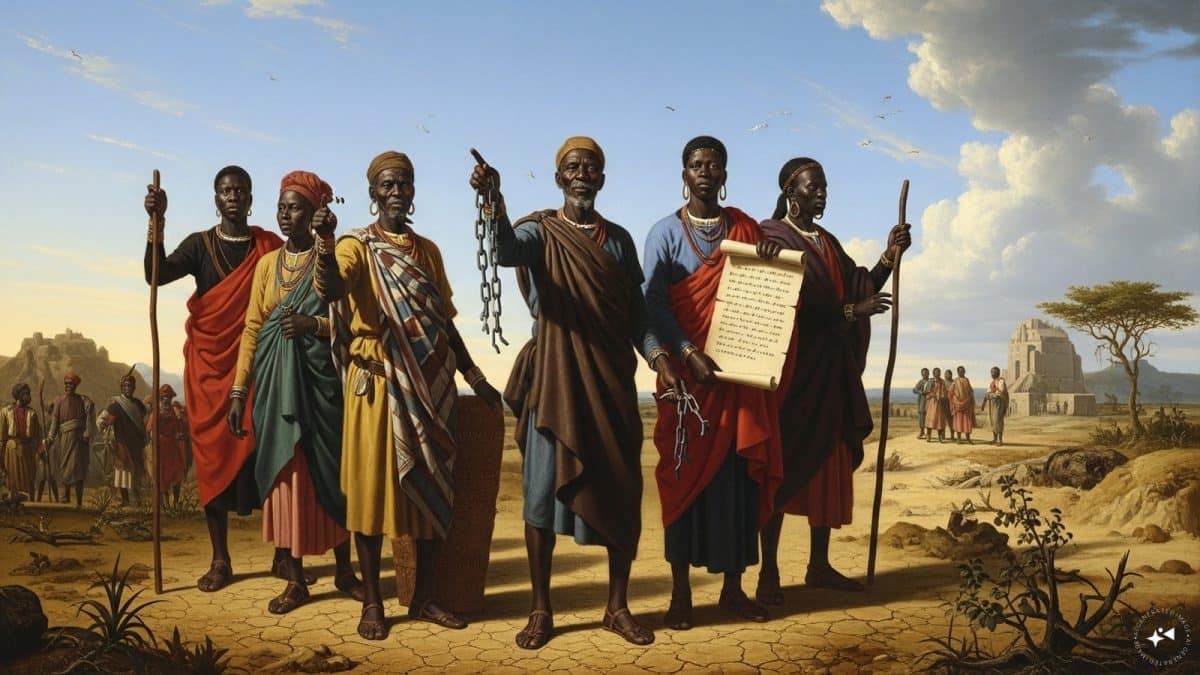
African leaders are intensifying efforts to ensure that crimes committed during colonial rule are formally recognised, criminalised, and addressed through meaningful reparations. Diplomats and senior officials gathered in Algiers on Sunday to advance an African Union resolution adopted earlier this year, seeking justice and compensation for communities harmed by centuries of exploitation, plunder, and violence.
Many participants emphasised that reparations must go beyond symbolic apologies, encompassing financial restitution, the return of looted artefacts, cancellation of colonial-era debts, and long-term development support. The debate has drawn parallels with Asia, where estimates suggest India alone may have lost resources worth trillions of dollars in today’s value, highlighting the scale of extraction that former colonies argue must be acknowledged and addressed.
STORY CONTINUES BELOW THIS AD
Algeria’s history as a reminder
Opening the conference, Algerian Foreign Minister Ahmed Attaf said Algeria’s history under French occupation underscored the urgency of restitution and the recovery of stolen property. He added that a dedicated legal framework would ensure that reparations are treated as “neither a gift nor a favour.”
“Africa is entitled to demand the official and explicit recognition of the crimes committed against its peoples during the colonial period, an indispensable first step toward addressing the consequences of that era, for which African countries and peoples continue to pay a heavy price in terms of exclusion, marginalisation and backwardness,” Attaf said.
More from World
While international conventions prohibit slavery, torture, and apartheid, colonialism itself has never been explicitly outlawed. This gap was a key focus at the African Union’s February summit, where leaders discussed forming a unified stance on reparations and defining colonisation as a crime against humanity.
The economic and cultural toll
The economic impact of colonialism on Africa is estimated to be staggering. European powers extracted natural resources through coercion, profiting from gold, diamonds, rubber, and other commodities, while leaving local populations impoverished. Calls for the return of looted African artefacts held in European museums have intensified in recent years.
Attaf emphasised the significance of holding the conference in Algeria, describing the country’s experience under French rule as among the harshest examples of colonial oppression. Nearly a million European settlers enjoyed superior rights, even as Algerians were conscripted to fight in World War II. During the independence struggle, hundreds of thousands were killed, and French forces employed torture, forced disappearances, and village destruction as part of counterinsurgency campaigns.
“Our continent retains the example of Algeria’s bitter ordeal as a rare model, almost without equivalent in history, in its nature, its logic and its practices,” Attaf said.
Linking history to modern conflicts
Attaf also drew parallels with the Western Sahara dispute, framing it as a case of incomplete decolonisation. Echoing the African Union’s stance, he called it “Africa’s last colony” and praised the Sahrawi people’s fight “to assert their legitimate and legal right to self-determination, as confirmed — and continuously reaffirmed — by international legality and UN doctrine on decolonisation.”
Algeria has long pressed for colonialism to be addressed under international law while avoiding political tensions with France. French President Emmanuel Macron, in 2017, acknowledged aspects of the history as a crime against humanity but stopped short of a formal apology, urging Algerians not to dwell on past grievances.
Mohamed Arezki Ferrad, a member of Algeria’s parliament, told the Associated Press that reparations must go beyond symbolism, noting that key Algerian artefacts seized during colonial rule, including the 16th-century cannon Baba Merzoug, remain in France.
STORY CONTINUES BELOW THIS AD
The UK-India reparations debate
In India, the case for formal reparations from the United Kingdom has gained renewed attention, particularly following Germany’s reparations to Namibia. In May 2021, Germany agreed to pay €1.1 billion over 39 years to the Herero and Nama people of present-day Namibia for a genocide committed between 1904 and 1908. German Foreign Minister Heiko Maas described this as “the darkest period in our shared history,” emphasising Germany’s moral and historical responsibility and ensuring the funds support reconstruction and development.
Germany’s approach contrasts sharply with that of other European powers, many of whom maintained colonial empi