

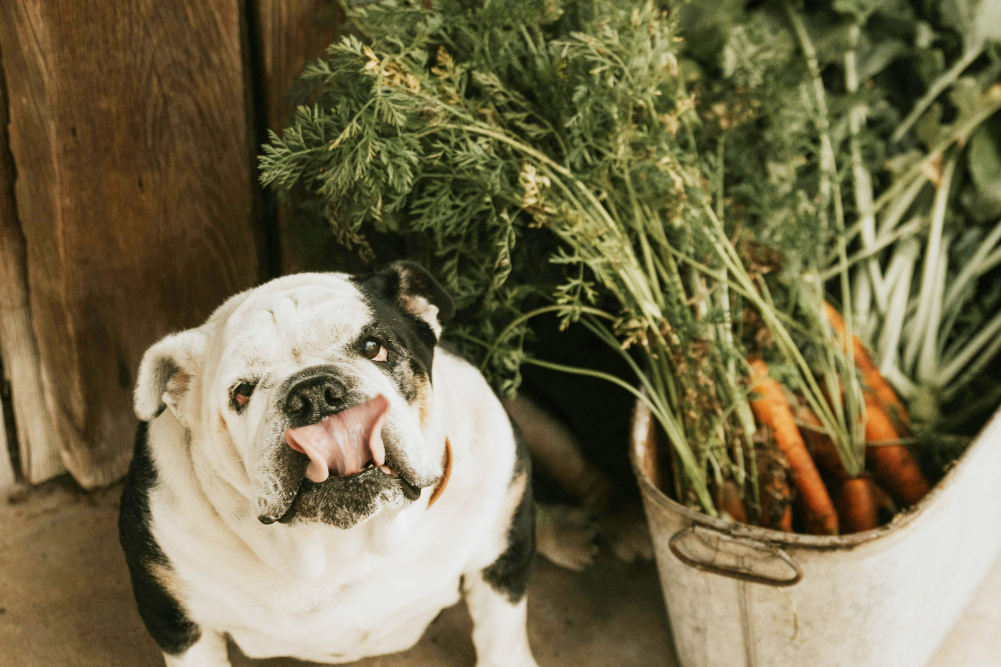
Discover why feeding your pets vegetables and fruit supports health, immunity, and cancer prevention in dogs and cats.
The Cancer Council recommends we eat at least five serves of vegetables and two serves of fruit daily, to reduce our risk for cancer and other chronic diseases. However, in conventional veterinary nutrition, we are taught that neither dogs nor cats require vegetables in their diet. Digestible carbohydrates and fibre are commonly included in pet foods. Fibre may be required for proper gastrointestinal function. Fermentable fibre provides energy sources for beneficial microbes in the gut and nourishment of intestinal cells. Insoluble fibre provides bulk to the stool and helps promote gut movement. Soluble fibre is used to soften stools.
But are there other reasons to offer your pet veggies? There is a trend these days towards feeding ancestral or grain-free diets and some raw diets that are vegetable-free. (Note: this discussion does not include keto diets, which tend to be low in vegetables and may have benefits for some neurological or cancer conditions.)
The bright colours of fruit and vegetables are due to four classes of plant chemicals: chlorophyll (green), carotenoids (yellow, red, orange), flavonoids: anthocyanins and anthoxanthins (red, blue, purple), and betalains (red, yellow, purple). Other phytochemicals (or phytonutrients) include isoflavones (in soybeans) and polyphenols (in berries, cloves and cacao).
Phytochemicals are not essential to plants, but they perform important secondary tasks such as repelling pests or protecting from sunlight as well as growth regulation. For thousands of years, these effects have been harvested to be used in foods, medicinal herbs and spices, teas and topical treatments.
There are