

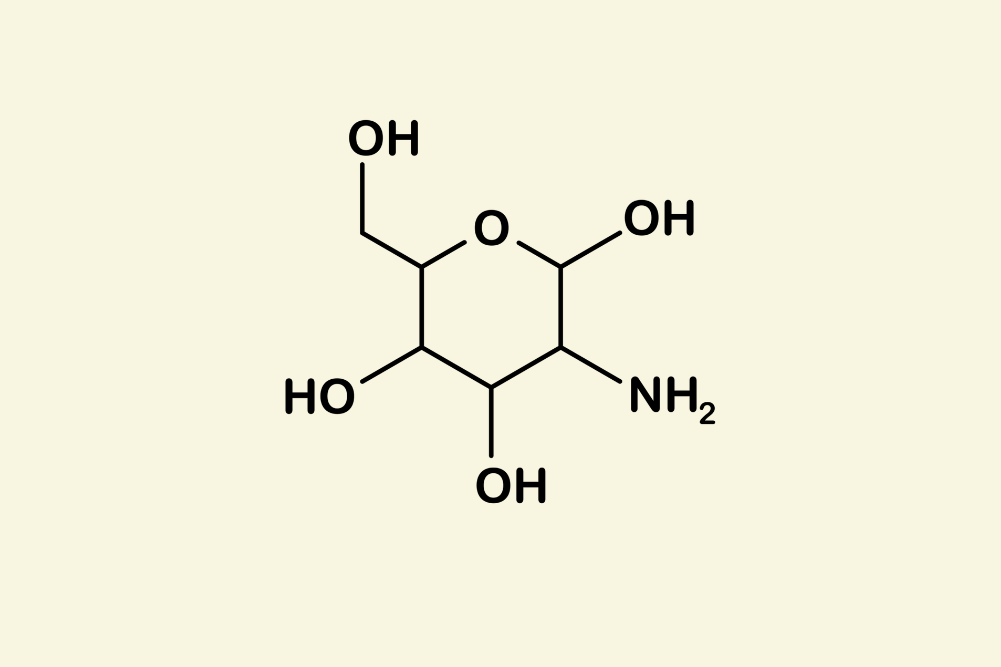
Glucosamine is the most popular supplement taken worldwide, first prepared in 1876 by Georg Ledderhose but not commercially available until 1939. It was initially manufactured by processing chitin from the shells of shellfish. Today, it’s also made from the tracheal cartilage of cattle used otherwise for food; reputable manufacturers make sure this is taken from cattle that have not received growth hormone. For vegetarians, it can also be manufactured from the fungus Aspergillus niger and from fermenting corn.
Glucosamine is an amino sugar. Amino sugars are formed in the body from glucose and an amino acid; in the case of N-acetyl-glucosamine (NAG), the amino acid is glutamine. These amino sugars bind together to form long polysaccharide chains called glycosaminoglycans (GAGs), which include glucosamine and chondroitin. They then combine with fibrous proteins such as collagen to form the extracellular matrix in the human body: the meshwork of tissue that holds cells (and therefore the body) together.
Therapeutic uses
Osteoarthritis
Idiopathic osteoarthritis is the most common form of osteoarthritis worldwide and remains the leading cause of disability with an associated socioeconomic burden in an increasingly ageing population. GAGs are a major component of cartilage (and ligaments), so supplementing with glucosamine provides the specific nutrients for the repair of these tissues while reducing the inflammation and therefore alleviating osteoarthritis.
Glucosamine is sold in various forms as sulphate, hydrochloride and NAG but the sulphur form appears to be the most effective for arthritis, sulphur being a critical nutrient in cartilage tissue.
Cancer: angiogenesis inhibition
Glucosamine (particularly as NAG) has been