

Last Updated: March 03, 2026, 17:20 IST
Oman is friend to all, enemy to none, was brokering peace between US and Iran: Why haven’t Gulf nations retaliated? What happens to Islamic nations’ unity? Explained
Rapid Read
Summarized by AI.
+
Oman, previously safe due to its neutrality, was hit by Iranian forces acting alone. The attack disrupted regional unity, driving Gulf states closer to the West, but they avoid retaliation to prevent broader conflict and economic crisis.
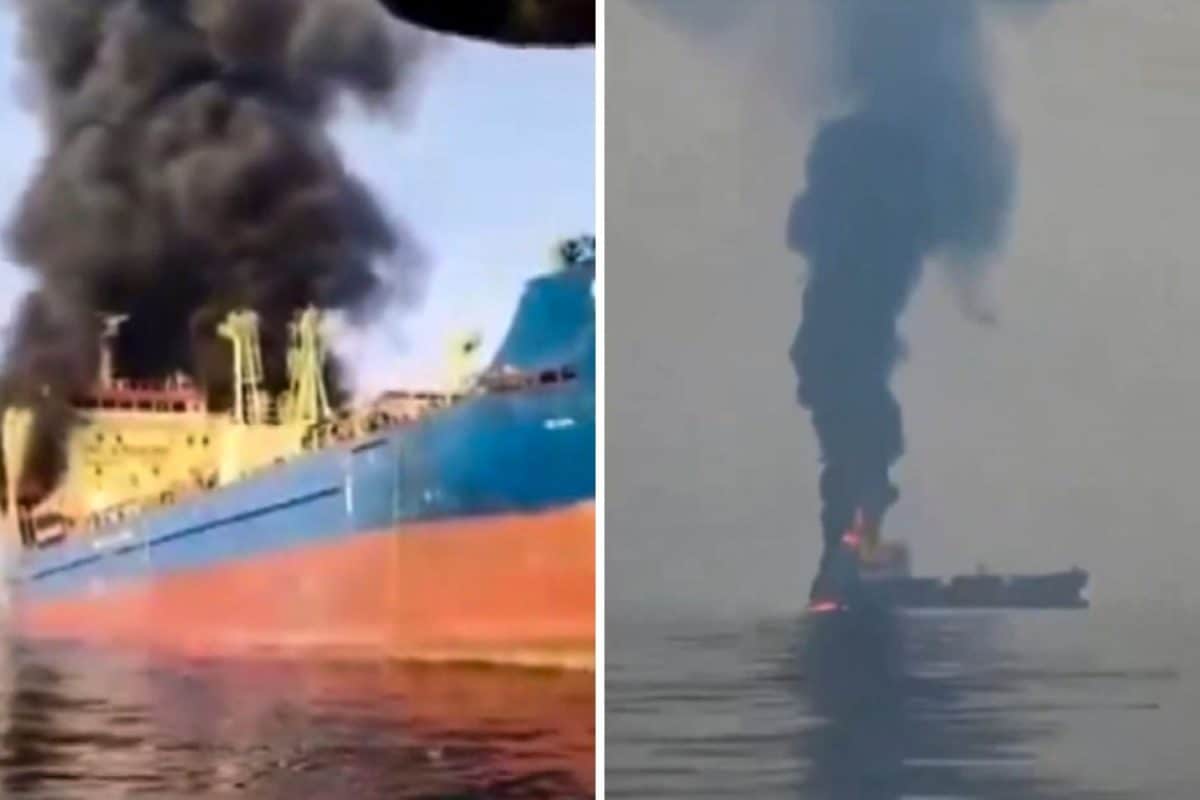
Smoke billows out from a Palau-flagged oil tanker with 15 Indian crew members after it came under attack from the Iranian military off Oman’s Musandam peninsula. (PTI)
Oman initially stood as the only Gulf state spared from Iran’s retaliatory campaign in response to the US-Israel strikes that killed Ayatollah Ali Khamenei.
However, as the war expanded, even this mediator found itself under fire, exposing a profound disconnect between Iran’s diplomatic and military wings.
What happened to Oman’s shield of neutrality? What has changed? Why Arab countries haven’t attacked Iran despite being hit, explained
OMAN: SWITZERLAND OF THE MIDDLE EAST Oman is frequently called the ‘Switzerland of the Middle East’ or the ‘Switzerland of Arabia’ due to its long-standing foreign policy of “friend to all, enemy to none”.
Hours before the US-Israeli strikes on February 28, Omani Foreign Minister Sayyid Badr Al Busaidi was brokering what he described as “unprecedented progress” in nuclear talks between Washington and Tehran.
Initially, Oman remained untouched by the missile barrages that struck Bahrain, Kuwait, the UAE, and Qatar.
This immunity was because unlike its neighbours, Oman does not host major permanent US combat hubs used for the initial strikes on Iran. Moreover, a 50-year security partnership, dating back to Iranian support during the Dhofar rebellion, has maintained institutional trust even after the 1979 Revolution.
Hours before the US-Israeli strikes on February 28, 2026, Omani Foreign Minister Sayyid Badr Al Busaidi was brokering what he described as “unprecedented progress” in nuclear talks between Washington and Tehran.
THE STRIKE ON THE MEDIATOR However, the immunity didn’t last for long. On March 1 and 2, 2026, when Iranian drones and projectiles targeted the Port of Duqm and vessels off the Omani coast.
‘NOT THE GOVERNMENT’S CHOICE’: DECODING IRANIAN FOREIGN MINISTER’S DEFENCE Iranian foreign minister Abbas Araghchi remarkably claimed these strikes were “not the government’s choice”. Araghchi told Al Jazeera that Iranian military units were acting “independently and somehow isolated” based on general prior instructions, rather than specific diplomatic directives.
Despite the diplomatic apology, analysts suggest the IRGC intended to send a clear message: in this “total war” no safe havens exist, and mediation offers no protection.
FRAGMENTED UNITY AMONG MUSLIM NATIONS The targeting of a neutral Arab mediator has highlighted the fragile unity within the Muslim world. While Oman urged for “inclusive dialogue” and warned that Israel is the primary source of regional insecurity, other Gulf nations like Bahrain and the UAE have increasingly viewed Israel as a strategic partner against Iran.
Iran’s strategy of “ratcheting up the pain” on Gulf states—including the closure of the Strait of Hormuz—is intended to force them to pressure the US to end the war. Instead of unifying the region against the US-Israeli campaign, the strikes on civilian infrastructure and mediat
Read More