

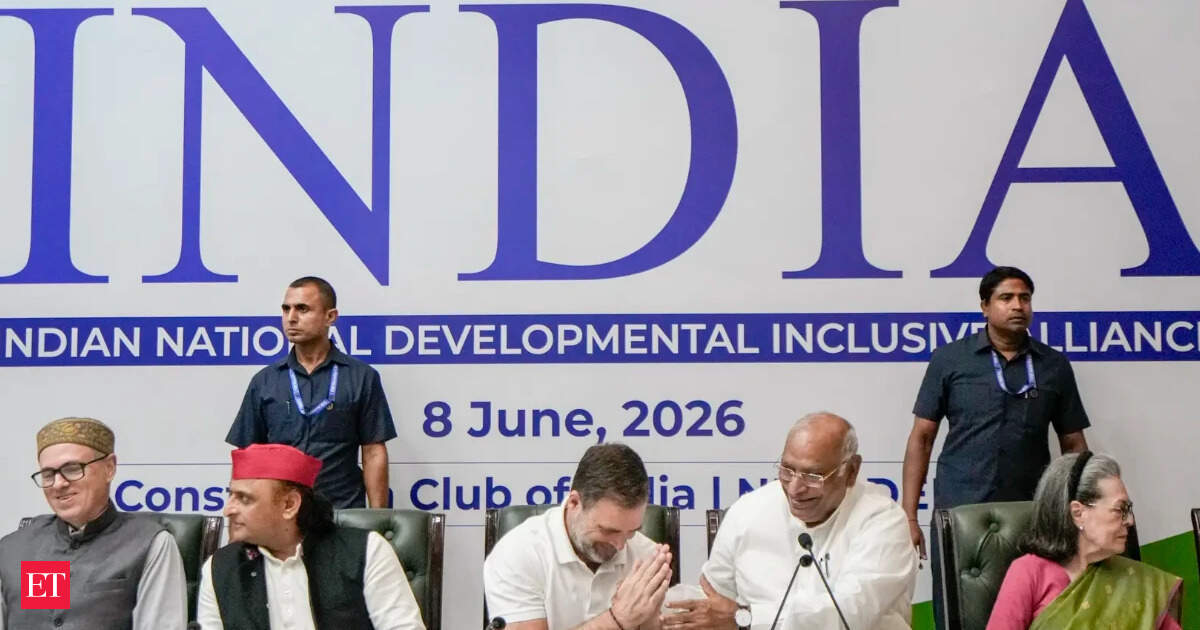
When Parliament reconvenes for the monsoon session, the most important political battle may not be fought across the treasury and opposition benches but within the opposition itself.
A dramatic split in the Trinamool Congress, the collapse of the Congress-DMK alliance, and fresh uncertainty surrounding Shiv Sena (UBT) have together altered the parliamentary arithmetic that underpins the INDIA bloc. The changes are significant enough to potentially strengthen the Narendra Modi government’s hand on some of its most ambitious legislative goals, including a possible revival of the contentious delimitation-linked women’s reservation bill that failed earlier this year.
Also Read: As Shiv Sena, TMC splits swell NDA ranks, TDP and JDU lose some of their bargaining chip
For months, the BJP’s challenge was straightforward. Despite commanding a comfortable majority in the Lok Sabha, it lacked the numbers needed to push through bills, which require support from two-thirds of members present and voting.
That weakness was exposed in April when the government’s Constitution (131st Amendment) Bill failed to secure the required backing in the Lok Sabha. The Modi Government managed the support of 298 members, well short of the threshold of 352 required for a constitutional amendment. BJP and its allies had secured 293 seats in the 2024 Lok Sabha elections.
The political landscape has shifted considerably since then.
Also Read: Can Eknath Shinde get 6 of 9 UBT MPs for a split? Numbers on a knife’s edge
The TMC factor The biggest change has emerged from West Bengal. Rebel Trinamool Congress MPs merged with a lesser known Nationalist Ci
Read More