

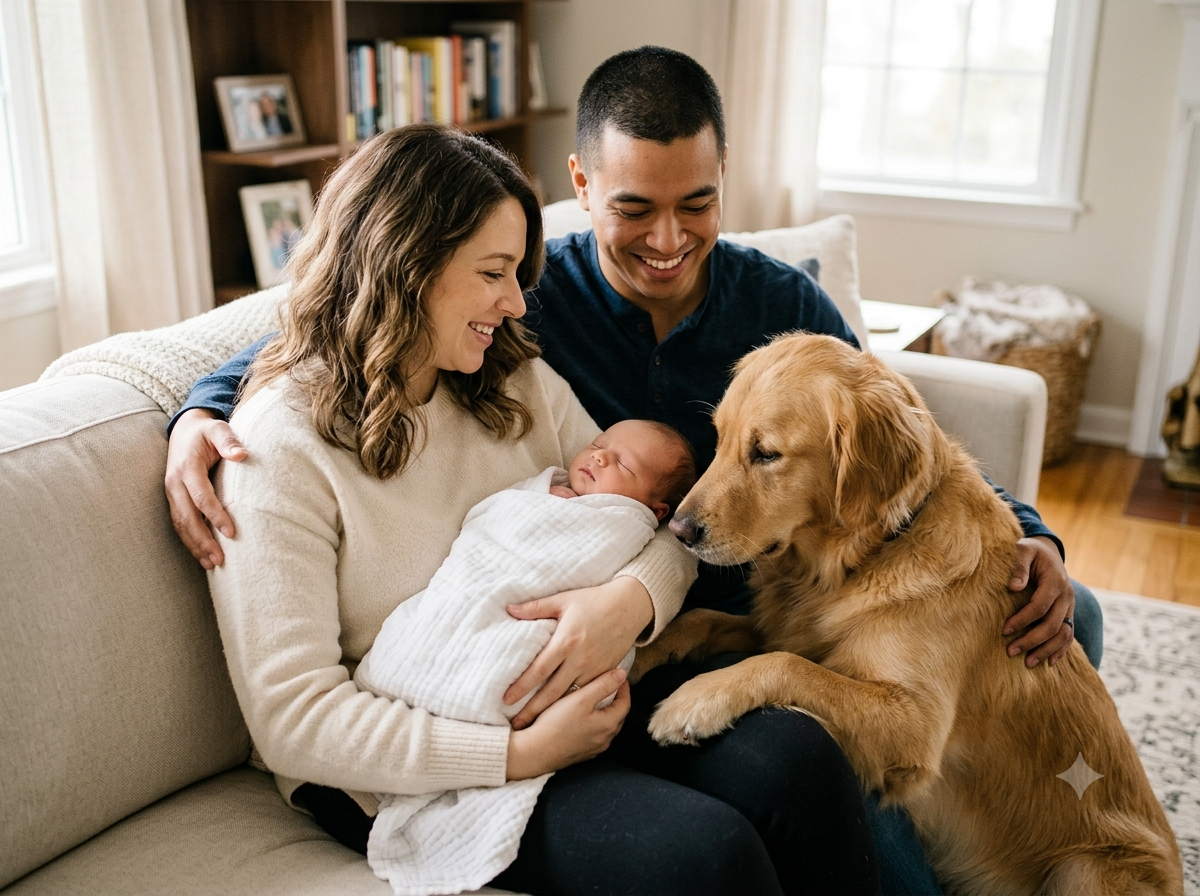
Many people believe that bringing a dog into a home with a new-born baby creates more work for parents. Psychology presents a broader picture. Several studies suggest that when families manage pet care safely and responsibly, dogs can become an important part of a child’s early environment. They may help parents build daily routines, increase outdoor activity, and create opportunities for positive family interaction. Researchers also say children who grow up with dogs often experience regular social contact, shared play, and emotional support. These experiences may influence emotional development and social learning. At the same time, experts remind families that supervision, hygiene, and proper pet training remain essential whenever babies and animals live together. Psychology does not suggest that every family should own a dog, but it explains how healthy human-animal relationships can contribute to family well-being.
Psychology says people who raise a dog along with their new-born child aren’t always taking on an extra emotional burden
Research suggests that families who raise a dog alongside their new-born child are not necessarily creating more stress in their lives. Psychology indicates that a healthy bond between children and family dogs may support emotional well-being, encourage physical activity, and help children develop empathy and social skills as they grow. Studies also suggest that parents may benefit from companionship and daily routines that include caring for both the baby and the pet. However, experts stress that these benefits depend on responsible pet ownership, proper training, good hygiene, and constant adult supervision whenever babies and dogs interact.
What Psychology says?
Psychology says
Read More