

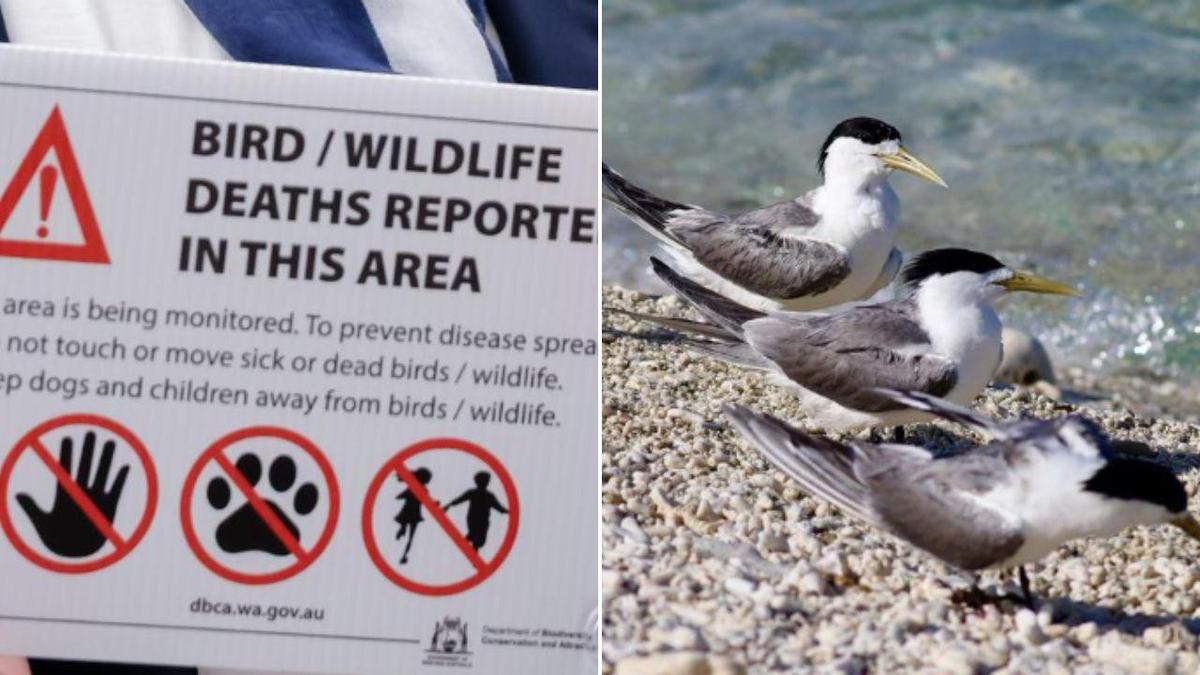
Australia is facing a fast‑moving wildlife crisis as more than 1000 crested terns in South Australia and dozens of penguins in Tasmania are found dead in a sudden and alarming escalation of the H5 bird flu strain.
The mass‑casualty events were confirmed on Wednesday, with authorities in both states warning the virus is now cutting through vulnerable coastal species at a rate not seen before.
In SA, surveillance teams uncovered three mortality events on Troubridge Island off Yorke Peninsula and Kangaroo Island’s North Page and South Page islands.
Know the news with the 7NEWS app: Download today Arrow
More than 1000 crested terns were found dead, and a suspected infection in a little penguin from Kangaroo Island is under investigation. SA has recorded 177 confirmed H5 cases.
SA Premier Peter Malinauskas said the losses were devastating.
“It is incredibly saddening to see crested terns dying in the number that they are,” he said.
“These are part of our ecosystem. They’re actually quite a beautiful bird and it’s really tragic to learn of this scale of event.”
Two dozen penguins have died near Port of Grassy in Tasmania. Credit: AAP Tasmania now confronting its own surge The Department of Natural Resources and Environment Tasmania has deployed extra staff to King Island after 28 dead penguins and three dead crested terns were discovered at the Port of Grassy.
Incident Controller Wes Ford said the deaths were distressing for locals and signalled the need for relentless monitoring.
“Our on-ground surveillance efforts, together with reports from the community, continue to help us identify and investigate sick and dead wild birds,” he said.
“Tasmanians care deeply about our wildlife, and particularly our penguins.”
Samples have been sent for testing, with results expected this week. Tasmania’s confirmed detections remain at 11, but authorities expect more reports along the north‑west coast and beyond.
Wildlife experts say the combined SA and Tasmania events mark the moment Australia’s bird flu threat becomes a full‑scale ecological emergency.
Invasive Species Council CEO Jack Gough said the deaths show the virus is now “becoming very real”.
“It is shocking to think that today we find out about over 1000 dead terns in South Australia and 28 dead penguins on King Island in Tasmania,” he said.
“This is a sad day for Australian wildlife, but it is only the start of the scale of deaths we can expect in the months ahead as the virus spreads.”
He warned that surveillance alone won’t save threatened species.
“Boots on the ground undertaking practical environmental action will determine whether bird populations can recover from this unstoppable wave,” he said.
“We cannot stop H5 bird flu moving through wild populations, but we can give our wildlife a fighting chance.”
Gough said Australia must act now to avoid catastrophic losses in the tens of thousands, renewing calls for the Albanese Government to establish a $200 million Wildlife Resilience Fund.
“We cannot stop bird flu moving through Australia, but we can determine how resilient our wildlife is when it arrives – and how well populations recover in the years that follow,” he said.