

Young Australians are abandoning traditional white-collar career paths in favour of trades, driven by fears that artificial intelligence is replacing entry-level positions in offices across the country.
The growing trend of job swaps is being fuelled by concerns that technology is making graduate roles obsolete before young workers can even get their foot in the door.
WATCH THE VIDEO ABOVE: Young Australians switch to trades amid AI job fears
Know the news with the 7NEWS app: Download today Arrow
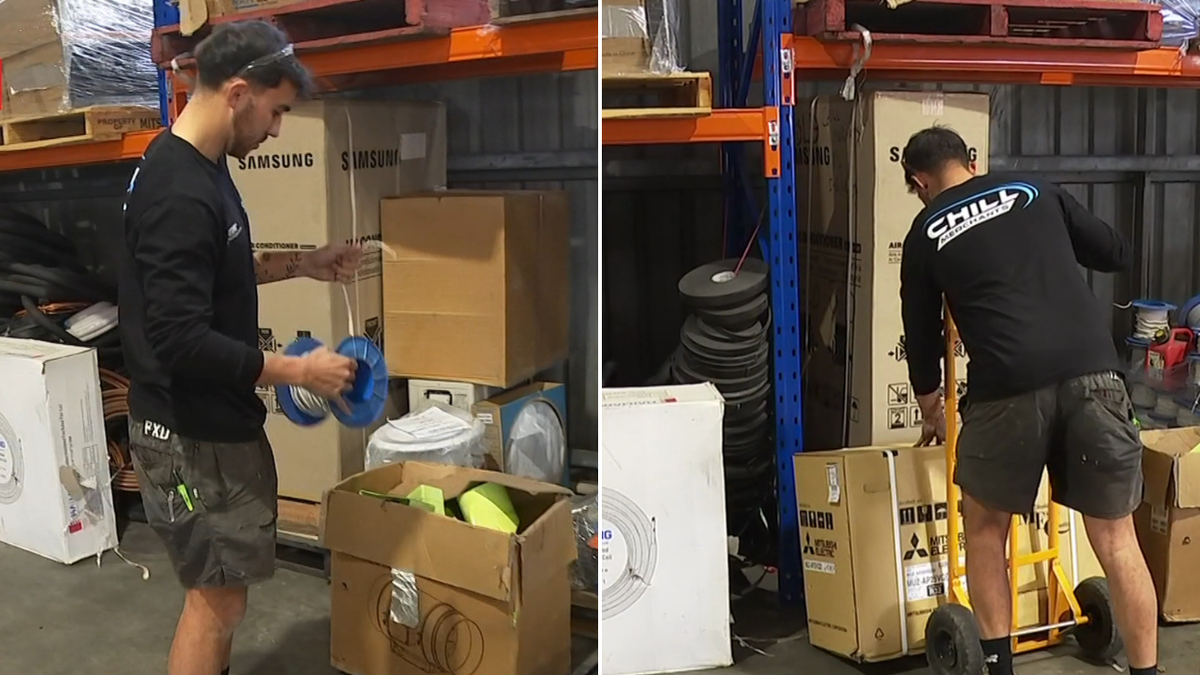
Toby Blooranta is one of many who’ve changed course. Armed with tools to build a future, it’s just not the one he originally expected.
“It really wasn’t on my radar at all. I was looking towards your classic white collar jobs, like accounting, finance,” Toby said.
But the dream changed when reality hit.
“You can’t find an AI that’s going to run a cable for you or, you know, unclog a toilet,” he said.
Toby Blooranta chose a trade over a white collar job. Credit: 7NEWS Blooranta became a heating, ventilation and air conditioning apprentice, while friends who graduated university struggle to find work.
Work180 CEO Gemma Lloyd says the problem is widespread.
“The entry level market is shrinking particularly for white collar roles. AI is doing all of the tasks that our young people used to learn from,” Lloyd said.
While AI can save time, raise productivity and create jobs, a recent survey of 200 young Australians has revealed alarming statistics.
Work180 has launched the Early Careers Coalition. Credit: 7NEWS The survey found 69 per cent are at least moderately concerned about AI’s impact on their job prospects, 58 per cent say AI has influenced a career decision, and 50 per cent of students are considering switching fields.
“It’s an early career crisis,” Lloyd said.
In response, Work180 has launched the Early Careers Coalition, encouraging businesses to help get the next generation into jobs.
“If we’re not getting our young people into jobs now, what’s going to happen in five years’ time? We’re not going to have anybody to do even the more senior roles,” Lloyd warned.
The goal of the Early Careers Coalition is to create and fill a million new jobs for young people by 2032, most on construction sites or workshops in industries where there’s a shortage.
“It’s about a commitment from the employers to say, hey, we’re not going to automate these jobs away. We’re making sure that we’re creating opportunities so our young people get a fair go,” Lloyd said.
The initiative aims to help young Australians find careers they can be proud of for the long run.