

No protesters were harmed during the making of this H&M fashion show. In fact all three of them were afforded so much time to range free on this runway—each in their own exclusive slots—that my benchmate conspiracy-theoried we might even be witnessing some fiendishly conceived form of reverse guerrilla marketing. “I mean I had trouble getting in, even with my QR code and ID,” she mused. “Plus there are so many security guards!” Everyone kept calm and carried on, London-style.
Even without the intruders, there was a lot to see in this Nick Knight-conceived production. The ShowStudio founder is one of fashion’s apex imagemakers and a pioneer of creative fashion film: here he had the chance to expand his practice to the live fashion arena. It was bookended by dance and musical performance via a spoken word rendition of Foreigner’s “I Want to Know What Love Is.” The opening section of the third collection shown, H&M Studio, saw the models walk in darkness illuminated only by the ersatz old-school paparazzi flashguns they were holding. Its closing section saw them walk in front of a screen upon which their reflection was hazily mirrored through a dynamically-sketched, gouache-tinted filter not unlike the effect used by H&M’s fellow Scandinavian legends A-ha in their 1985 video for “Take on Me.”
It was entertaining enough to watch, especially with the unrehearsed cameos, and catnip for those here to pump out content. But at the risk of seeming quaintly old-fashioned—which maybe comes with the territory when you’re paraphrasing Foreigner—what I want a show to show me is the clothes.
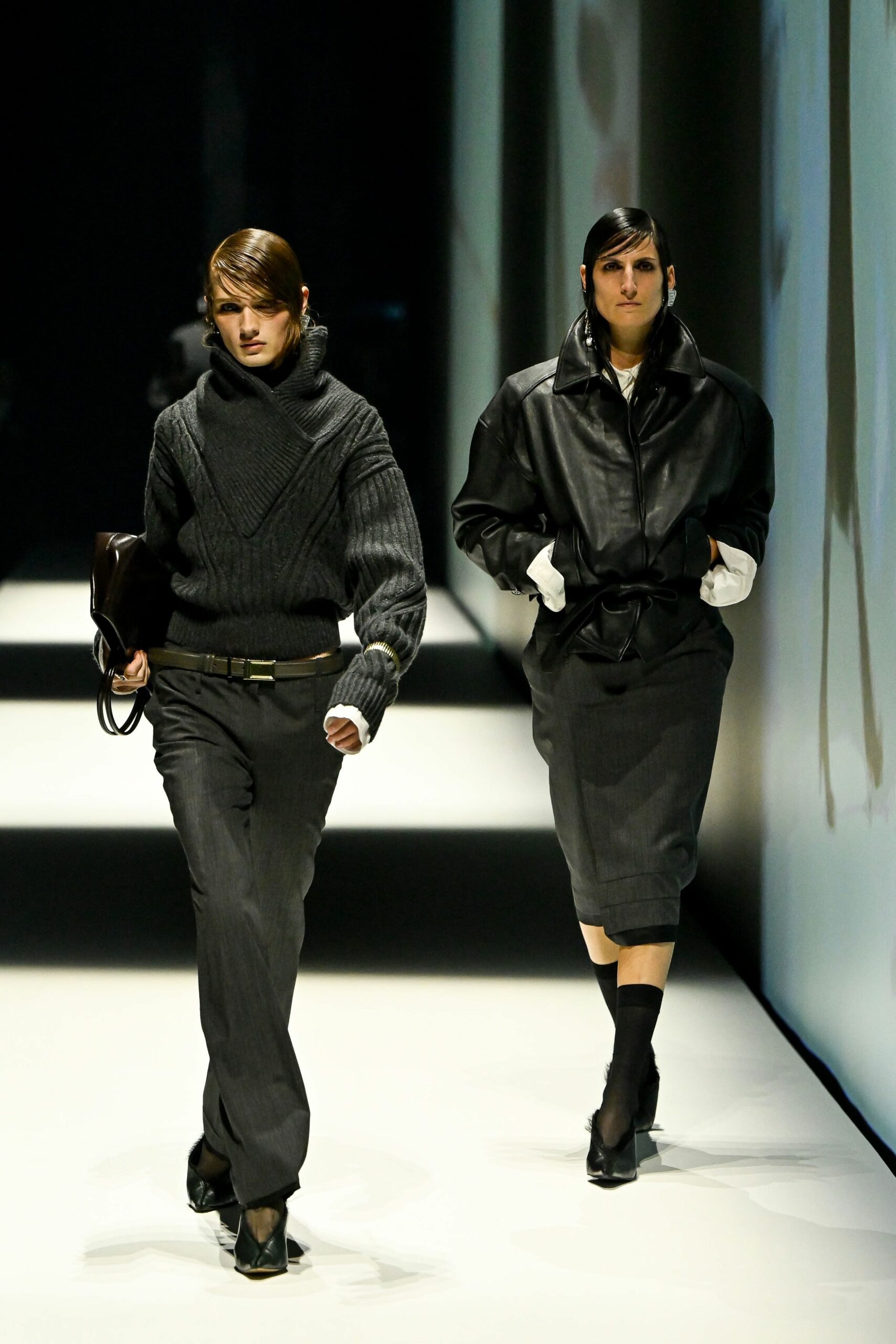
Ann-Sofie Johansson, H&M’s Womenswear Head of Design, has been with the company for nigh-on 40 years. In her Studio collection tonight, it wasn’t only the paparazzi flashguns in the darkened performance preamble that signaled La Dolce Vita (Fellini’s film featured a photographer named Paparazzo). As well as a research trip to Palermo, the collection was in part inspired by the chiaroscuro photography of the Bagheria-born Magnum lensman Fernando Scianna (a key visual collaborator with Dolce & Gabbana during their formative years). When the lights did thankfully rise they illuminated a corresponding contrast between structure (via finely executed slim dark tailoring, tightly-darted shirting, and light corseting) and sensuality (in lace-edged satin skirts, slip dresses, and loosely-cut day pajamas).
The tensions between each side tended to erupt at the edges; cutely pointed low-heeled pumps came with uppers fringed in horsehair-ish texture, cuffs and collars on silky and cotton shirting were sometimes doubled up, scrunched black silky-satin faux-underpinnings rose up beneath strict tailored necklines, and white laced nightshirting peeked south of fleshily fitted skirting. Johansson described the Studio woman as someone for whom “things can’t look too proper.”
Strong shouldered overcoats in Monteco wool were as silhouette-defining as low-armholed, shawl-collared, hip-hugging rib knits were made to ebb and flow around the body as it moved. The dark foliage of embroidered clusters that sprouted in thick swathes across dresses and skirts was similarly designed to signal through articulation. This was an impressive H&M Studio collection that played structure against sensuality, and which came wrapped within an expressively ShowStudio-powered show that traced a line between physical and digital fashion image creation.