

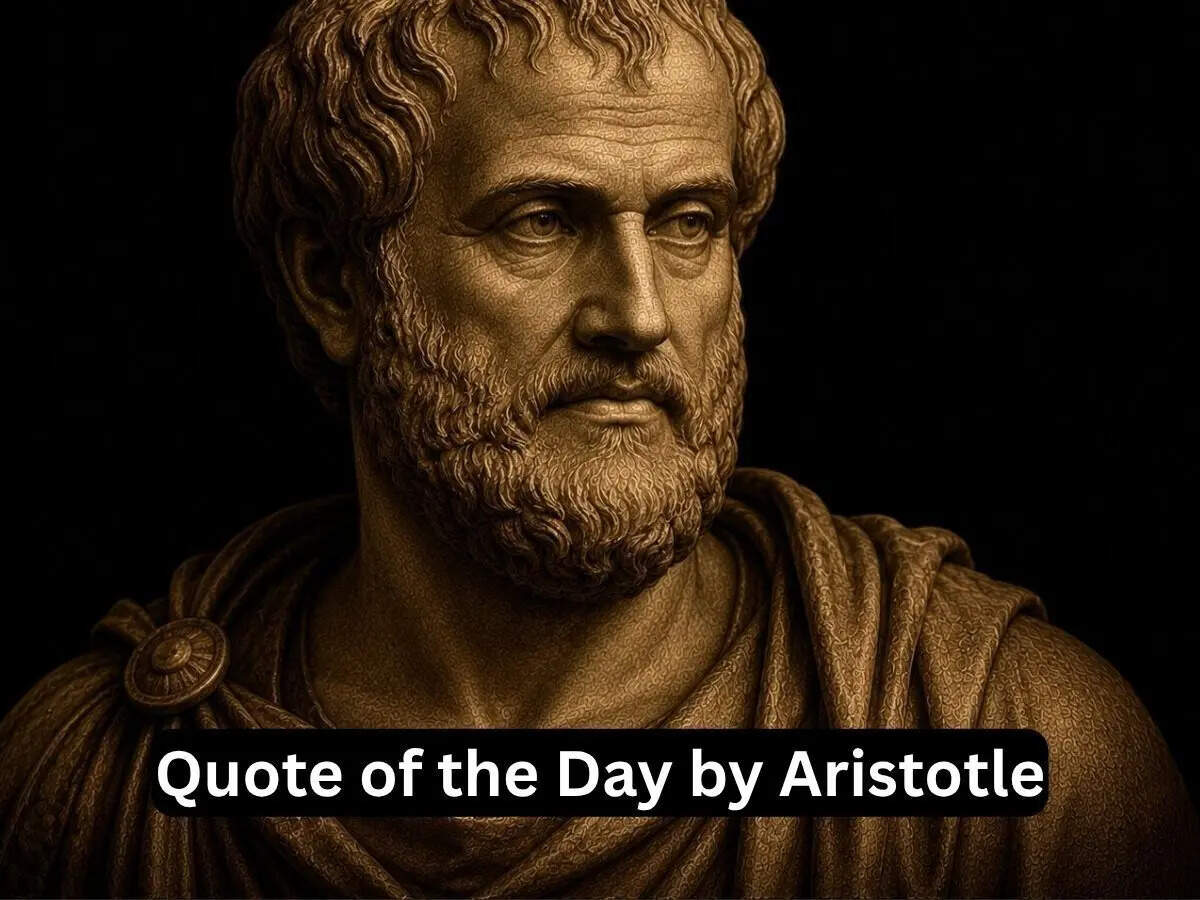
Aristotle was one of the most influential thinkers in human history. His ideas shaped philosophy, science, politics, ethics, logic, literature, and our understanding of knowledge itself.
While philosophers such as Plato often focused on abstract questions and ideal Forms, Aristotle was deeply interested in the world around him. He wanted to understand how people behave, how societies function, how governments should be organised, how animals live, how knowledge is acquired, and, above all, what it means to live a good human life.
Quote of the Day by Aristotle: “When you have thrown a stone you cannot bring it back again, but nevertheless you are responsible for having taken up the stone and flung it, for the origin of the act was within you” The Meaning Behind the Stone Aristotle’s image is remarkably simple. Imagine picking up a stone and throwing it. Once it leaves your hand, you cannot bring it back. You may regret the decision, wish you had aimed differently, or discover that it landed somewhere you never intended. But the moment when you had complete control over the action has already passed.
For Aristotle, human behaviour can work in much the same way.
The deeper message of the metaphor is not simply that actions have consequences. It is that responsibility begins before the consequences appear. The moment of choice is the moment when responsibility begins.
How Our Choices Shape Our Character This idea becomes especially important in Aristotle’s discussion of character. A person does not become courageous, dishonest, generous, cruel, or unjust through a single decision. Character develops gradually through choices and repeated behaviour.
What we repeatedly do today can influence the person we become tomorrow.
This makes Aristotle’s argument deeper than the familiar advice to “think before you act.” He suggests that our choices can develop into habits, and those habits can eventually become part of our character.
A person may cho
Read More