

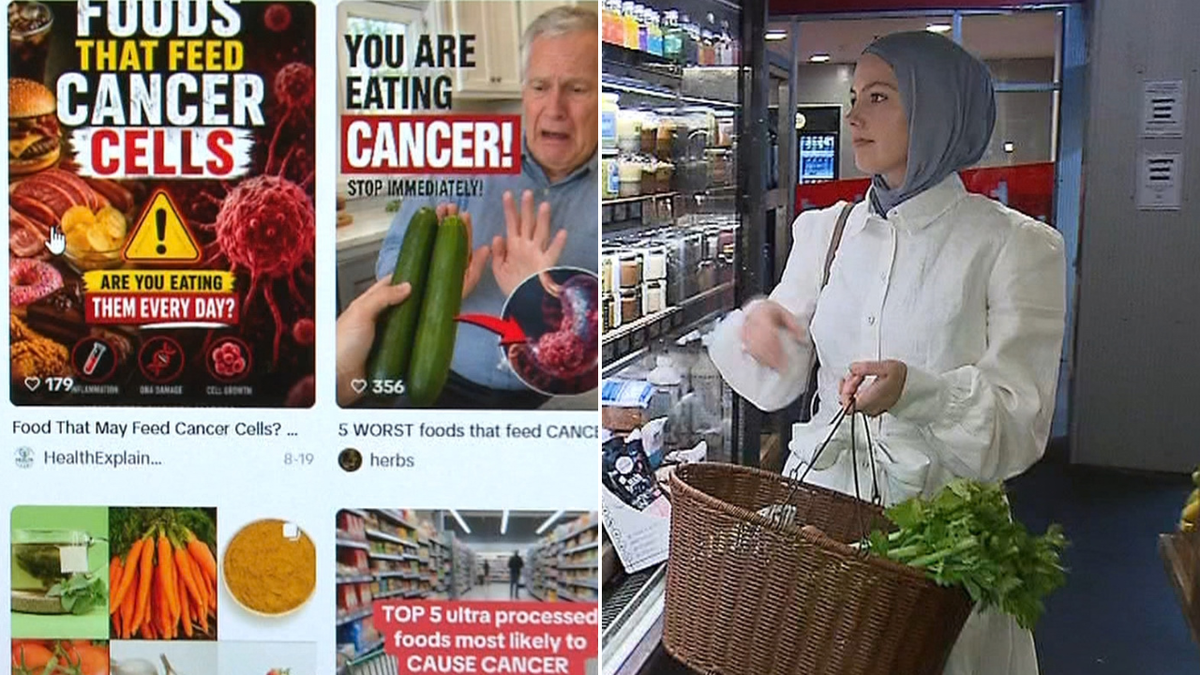
Medical experts are sounding the alarm about a staggering number of bogus health claims targeting women with breast cancer, with a new study finding almost 90 per cent of nutrition advice circulating online can’t be trusted.
From chugging down olive oil to munching on apricot seeds, social media is flooded with claims that have health experts in disbelief.
WATCH THE VIDEO ABOVE: Bogus cancer advice floods social media
Know the news with the 7NEWS app: Download today Arrow
Researchers at Adelaide University have analysed 150 nutrition claims from eight different online platforms, each one targeting women with breast cancer.
They found almost 90 per cent had no reliable scientific evidence to back them up.
The findings are a source of frustration for Angelica-Hazel Toutounji, a breast cancer survivor who was diagnosed two-and-a-half years ago at just 33.
She was bombarded with unfounded information.
“I should go on a water cleanse, I should just fast, I should do this and that. It was really overwhelming,” she said.
“And at a time when I was just so scared.
“It was really hard to navigate that.”
Medical experts are sounding the alarm about a staggering number of bogus health claims targeting women with breast cancer, with a new study finding almost 90 per cent of nutrition advice circulating online can’t be trusted. Credit: 7NEWS Angelica-Hazel Toutounji, a breast cancer survivor who was diagnosed 2.5 years ago at just 33, said bogus information was a source of frustration during her treatment. Credit: 7NEWS So what do experts say patients should be eating to maximise their chances of recovery?
That answer depends on a host of individual factors, but they do say be wary of anyone who suggests a blanket ban on any of the major food groups.
“Really the best advice actually comes from the health professionals who are treating that person,” Adelaide Uni breast health researcher professor Wendy Ingman said.