

“For thriving states, international peace and stability are not a luxury. They are the foundation of our national stories.”
Qatar’s Prime Minister Sheikh Mohammed bin Abdulrahman bin Jassim Al Thani made this point at the Oxford Union earlier this month. For countries such as Qatar, prosperity rests on connections extending far beyond their borders. Energy exports, shipping routes and overseas investments depend on international predictability. Their security policy has to reflect that.
The meeting of the presidents of the United States, China and Russia – Donald Trump, Xi Jinping and Vladimir Putin – in Shenzhen on November 19 brought the problem into focus. Their declaration covered nuclear risks, energy supplies and reform of the United Nations. These are matters that affect every country. A few powers retain disproportionate influence over the outcome.
Dialogue among these powers is welcome. We should, however, have no illusions that their willingness to sit together signals the end of their competition. They can reach agreements while continuing to contest influence and access to resources. For countries outside the room, the consequences may arrive through a disrupted shipping route, a new restriction on trade or a security decision they had no part in making.
The prime minister’s concept of thriving states offers a way to think about their response. He described agile, stable and prosperous countries that have built influence beyond their size. Economic strength, adaptable institutions and trusted relationships give them room to act. Their exposure to decisions taken elsewhere gives them a reason to act together. Economic importance is no guarantee of security.
Thriving states can also help bridge the gaps between competing great powers. By maintaining diplomatic and economic ties with all sides, they can keep channels open when relations deteriorate. This gives them room to facilitate dialogue, support conflict resolution and identify areas where rivals still have an interest in cooperating.
The familiar classifications are of limited help here. The Global North and the Global South tell us little about which countries can work together on a particular problem. Developed and developing say something about economic conditions, but much less about diplomatic reach or the ability to support a peace process. A country may be small in population and still possess capabilities that larger states need.
Negotiations still have to take place. Aid needs access, ceasefires need monitoring, and agreements need someone to keep working on them after the announcement. Thriving states should take greater responsibility for this work. Their diplomatic access and financial resources are increasingly necessary to sustain functions that international institutions struggle to perform consistently.
Qatar is already doing this through its mediation between Washington and Tehran and its work on implementing the Gaza agreement. The limits of these efforts are visible. Agreements are violated, talks stall and violence continues. Maintaining a channel nevertheless preserves the possibility of a negotiated outcome. That channel has to survive setbacks if it is to be useful when an opening appears.
At Oxford, the prime minister pointed to Qatar’s cooperation with Norway and Switzerland on the situation in the Democratic Republic of the Congo (DRC). Such partnerships bring different relationships and experience to mediation. They offer a practical basis for cooperation among states that share an interest in a settlement, even when their wider foreign policies differ.
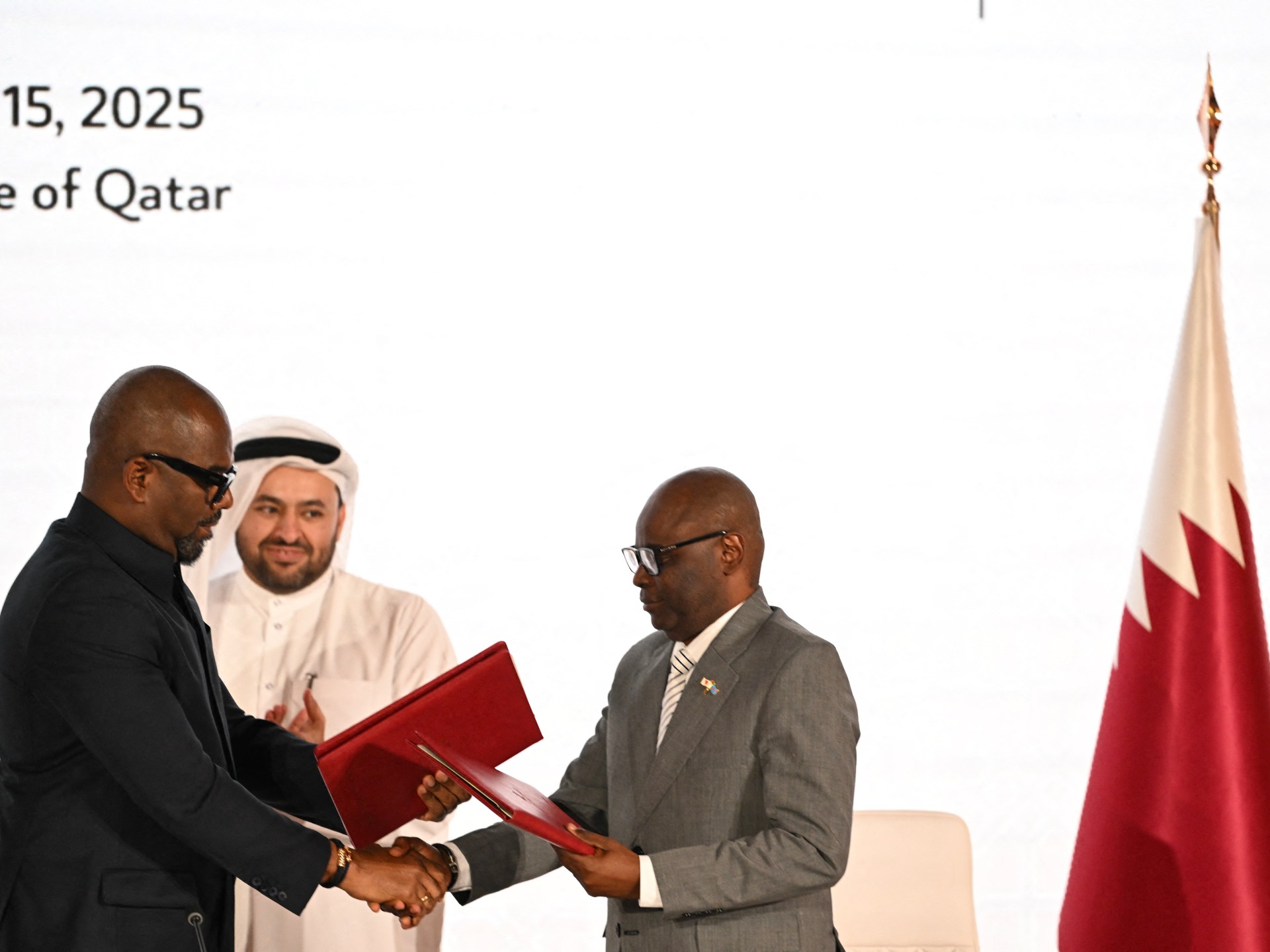
Regional organisations remain essential. In eastern DRC, Qatari facilitation of negotiations between the Congolese government and the AFC/M23 rebel alliance has worked alongside efforts by the African Union, the US and Switzerland. Continued fighting and limited implementation show how much remains to be done. Thriving states should strengthen these partnerships and support the regional institutions involved.
The work also requires money and a longer view of what makes peace last. Preliminary OECD figures put Qatar’s official development assistance in 2025 at more than $900m. Restoring services, supporting institutions and creating economic opportunities are all critical for the settlement of conflicts. People need to see that an agreement changes something in their lives.
Commercial investment matters for a related reason. A 2025 Federal Reserve staff study documented how foreign direct investment is fragmenting along ideological and geographical lines. A government seeking finance for infrastructure or technology increasingly has to consider the strategic dependencies that may accompany it. Control of a port or a critical supply chain can give an outside power influence well beyond the original investment.
Thriving states have an opportunity to offer investment with fewer demands for geopolitical alignment. For a country with limited coercive reach and an economy dependent on international exchange, keeping markets open may be more valuable than drawing other countries into an exclusive sphere of influence. The benefit to recipients is greater choice over both their economic partners and their foreign policy.
That difference has to be demonstrated. Thriving states have interests, and their investments also generate influence.
The next step is to organise sustained cooperation among willing thriving states. Their economies are already connected through trade and investment. Their diplomatic cooperation should acquire comparable depth. A standing partnership would allow them to combine capabilities around particular problems while retaining their own priorities. Agreement on every international dispute is an unrealistic condition for useful work.
The same layered and networked approach I have advocated for Gulf security applies here: different partners undertake different tasks, and their efforts need to connect. In a peace process, one country may have access to the parties while another can support monitoring or implementation. Governments should agree how to bring those contributions together before the next crisis demands them.
Development agencies should pool resources for implementing agreements, with priorities established in consultation with local institutions and affected communities. Commercial investors can support recovery where viable opportunities exist. Financing and implementation arrangements should be prepared during negotiations, so that a signed agreement is followed by work people can see. Leaving those questions until later risks losing the opening that diplomacy has created.
The partnership should support the UN and regional organisations with funding, expertise and coordinated diplomacy. It will also need consistency. Sovereignty and civilian protection must matter when a partner violates them. Countries asking for a greater role in international security should be prepared to defend the principles that make their own prosperity possible. And we saw this very clearly when Qatar defended itself against Iranian aggression earlier this year.
Shenzhen is a reminder that major powers will continue to negotiate over the shape of the international order. Thriving states have their own resources and interests to bring to that discussion. They should begin by organising the work they already do and committing to sustain it together. Acting separately gives them less influence than their combined capabilities should permit.
The views expressed in this article are the author’s own and do not necessarily reflect Al Jazeera’s editorial stance.