

In its earliest days, the Iran War appeared to be a quick military success.
The numbers after just three weeks were overwhelming; US and Israeli strikes had hit more than 15,000 targets, flown about 5700 sorties and knocked out more than 85 per cent of Iran’s air defence systems.
The White House talked-up Operation Epic Fury as “massive”.
Know the news with the 7NEWS app: Download today Arrow
“Iran’s ballistic missile capacity is functionally destroyed. Their navy assessed combat ineffective. Complete and total aerial dominance over Iran,” the White House said.
Iran’s feared military had been overwhelmed.
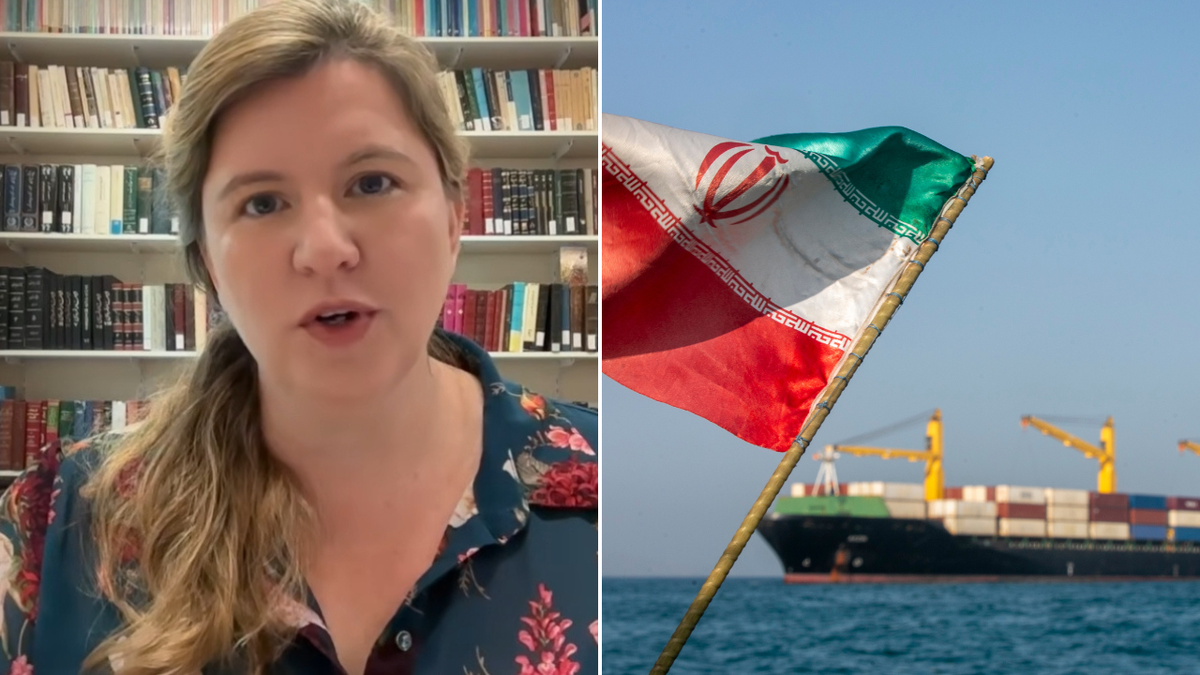
Dr Jessie Moritz, a senior lecturer in the Australian National University’s Centre for Arab and Islamic Studies. Credit: 7NEWS Three months into the war, there’s confidence an extended ceasefire is close, but the assessment on whether the war has or even can achieve the US and Israeli objectives, is far less clear.
“We have paradoxically strengthened the (Iranian) regime,” says Dr Jessie Moritz, a senior lecturer in the Australian National University’s Centre for Arab and Islamic Studies.
Moritz has spoken with the 7NEWS podcast The Issue, claiming: “What’s really frustrating is that it was predictable. … the response by the Iranian regime to this conflict was predictable.”
The key feature of that response has been Iran’s closure of the Strait of Hormuz, the critical shipping channel that carries about 20 percent of global oil.
That threat, according to Moritz, was clear well before the US and Israel executed their attack plan.
“I don’t know any serious Middle East analyst that would take this plan (to attack Iran) and think it would be successful.”
She also argues one of Epic Fury’s key early successes has come back to haunt the operation. Killing the Iranian leadership has complicated later efforts to find a settlement.
“It’s been particularly difficult to negotiate with them. That’s what happens when the leaders are not available anymore.”
An Iranian flag flutters in the wind as ships remain anchored on May 16, 2026 in the Strait of Hormuz near Larak Island, Iran. (Photo by Majid Saeedi/Getty Images) Credit: Majid Saeedi/Getty Images A poster depicts Iranian soldiers holding a net in the shape of the Strait of Hormuz, with US military aircraft ensnared in a fishing net, on May 9, 2026 in Tehran, Iran. Credit: Majid Saeedi/Getty Images US President Donald Trump has made clear one measure of success for the operation; keeping Iran from having a nuclear weapon.
Negotiations in the weeks ahead may still achieve that, though Mortiz says the war has changed the incentives for Iran in this regard.
“My concern is that … they are now incentivised to rush towards that weapon,” Moritz said.
“We’ll have to see what they agree in terms of the ceasefire deal and potential transfer of uranium and radioactive material out of the country, but at this stage the political incentive unfortunately is for them to rush towards that weapon rather than put it down.”
Three weeks in, the Iran War looked clear cut. Three months in, the case for the February attack is far more clouded.
You can catch more of The Issue on Listnr or watch full episodes on our YouTube channel.