

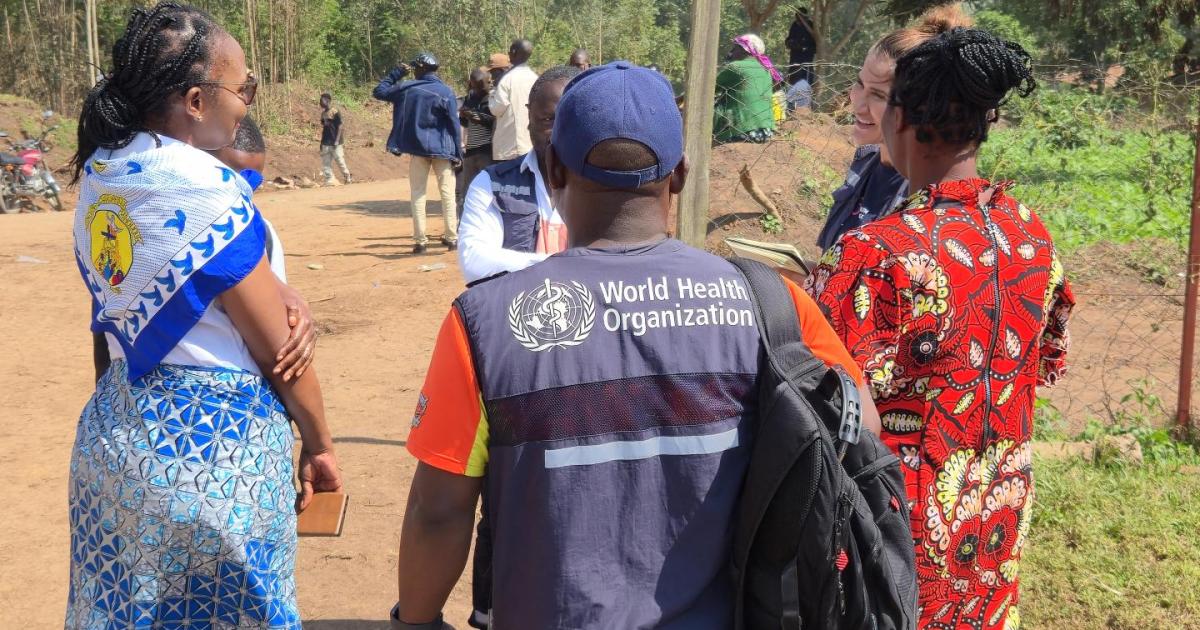
Nizi, the Democratic Republic of the Congo—“We recorded the first case in May, a few days before the official declaration of the outbreak. By the end of May, there was an increase in suspected cases,” recalls Dr Jean Claude Lonzama, Chief Medical Officer of the Nizi health zone. “We launched the first response actions against this virus in our health zone, but the outbreak reached its most critical level in July.”
The Nizi health zone was among the first affected by the Bundibugyo virus disease epidemic in Ituri Province. In July, the zone reported 827 confirmed cases, including 488 deaths, with 59% of deaths occurring in the community.
On the ground, resistance was strong. Families refused to seek care in Ebola treatment centres and resisted dignified and safe burials. From 10 to 18 August 2026, with support from the World Health Organization (WHO), a rapid survey was conducted in four health areas of the zone to understand community deaths and reluctance to seek care. “We tried to understand the social and cultural causes behind the refusal of life saving interventions,” explains Nina Gobat, WHO community survey officer in the response team.
The rapid assessment showed that transmission was facilitated by low suspicion of Bundibugyo virus disease at the onset. Faced with non specific initial symptoms such as headache, fever, abdominal pain and vomiting, affected individuals tended to self diagnose without considering the disease among possible causes.
Care pathways included home care, often provided by women, self medication and recourse to traditional healers. T