

Synopsis
The Calcasieu Pass vessel, constructed in 1982 for oil operations, has made a remarkable transition to become a key component of Delaware’s artificial reef ecosystem. Initially serving in the menhaden fishing fleet, this vessel’s end-of-life has been embraced through a thoughtful conversion process, funded federally.
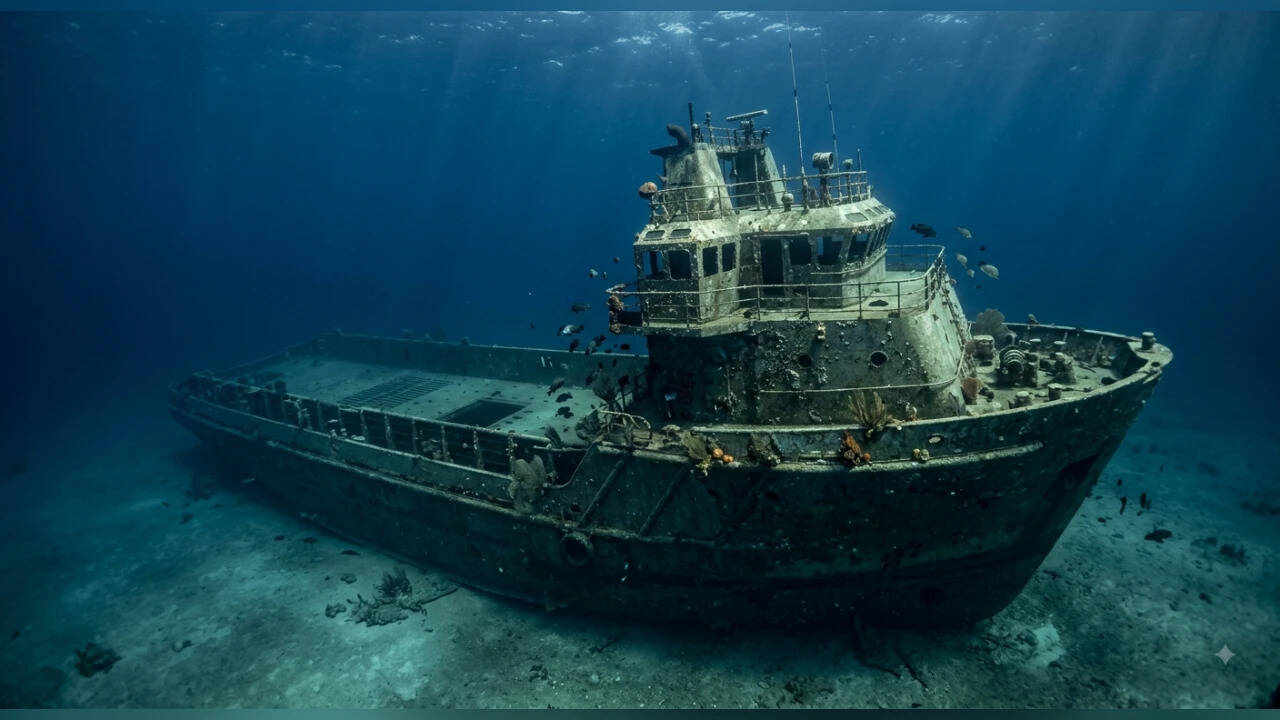
Calcasieu Pass artificial reef (Photo: AI/Gemini)Disclaimer: This image is an AI-generated artistic representation and does not depict the actual vessel or reef site. The Calcasieu Pass has gone from supporting offshore oil operations to becoming part of Delaware’s largest artificial reef system.
Built in 1982 as a supply vessel for the offshore oil industry, the ship was later converted in 1989 for the menhaden fishing fleet, as per a report. It operated out of Virginia and processed menhaden off the Delaware coast.
After its working life ended, the vessel was cleaned and prepared for a very different purpose: becoming an underwater habitat, as per an Ecoportal report.
From oil vessel to fishing boat The Calcasieu Pass was originally designed to support offshore oil operations.
Seven years after it was built, its role changed when it joined the menhaden fishing fleet. Over the years, the vessel operated out of Virginia while processing the fish off Delaware’s coast.
Its latest transformation came after $285,000 was spent on its purchase and conversion, using federal funds from the Sport Fishing Restoration program, according to the report.
The vessel now rests on Delaware’s seafloor Coleen Marine, based in Norfolk, Virginia, carried out the sinking at Reef Site 13, also known as Del-Jersey-Land Reef.
The operation received authorization from the Environmental Protection Agency and the U.S. Coast Guard after the ship underwent environmental remediation and secured the required permits.
At about 55 meters long and 12 meters wide, the vessel adds a substantial structure to t
Read More