

Synopsis
Muddy Creek is a tributary of the Rhode River and flows through the Smithsonian Environmental Research Center, an important site for ecological research as well as a popular destination for local hikers.
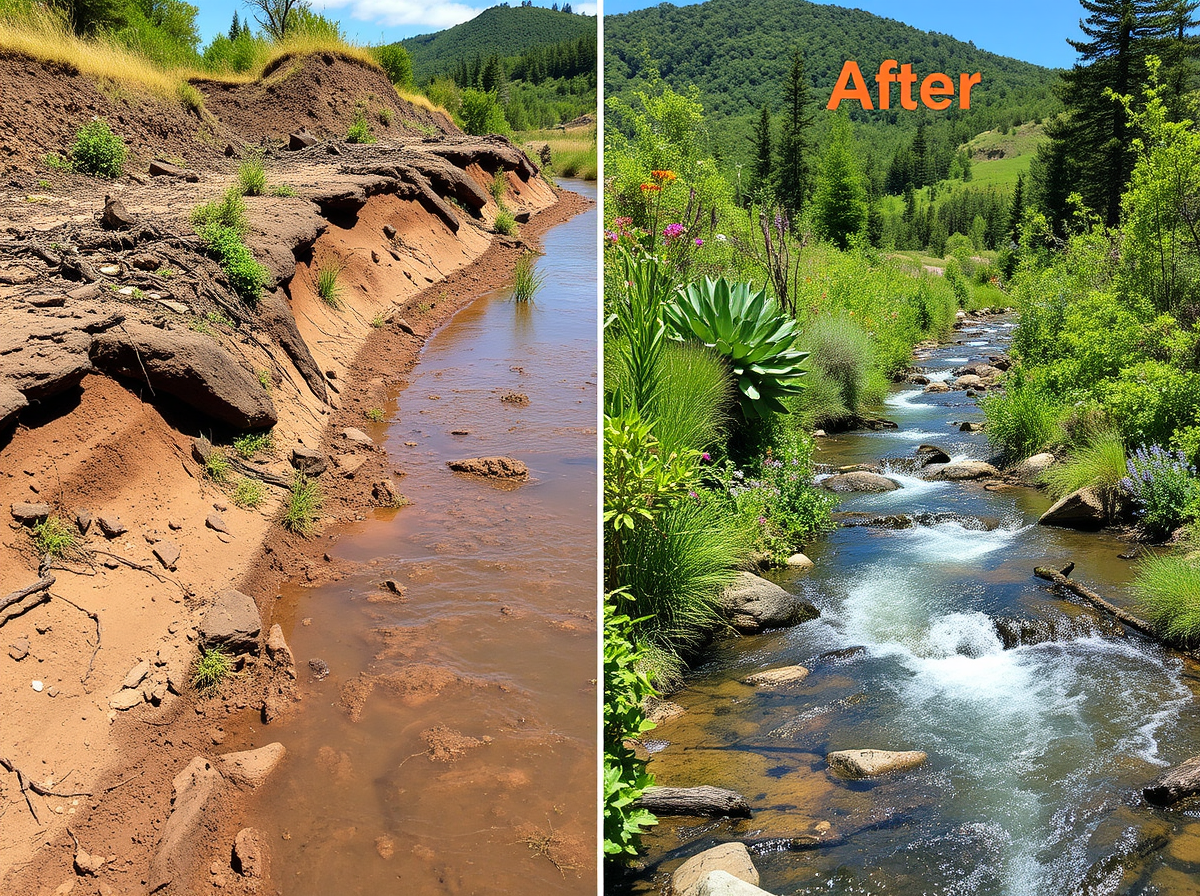
Global Desk In 2016, researchers took an unconventional approach to restoring a severely degraded section of Maryland’s Muddy Creek: instead of simply reinforcing the eroded banks, they rebuilt the stream itself with layers of woodchips, sand and gravel. The 452-meter restoration in Edgewater, Maryland, transformed a deeply incised channel into a more natural stream system connected to its floodplain and groundwater. Two years later, monitoring showed substantial improvements in water quality and stream function, including a reported 73.8% decline in suspended sediment. The project offers a compelling example of how nature-based stream restoration can address erosion, pollution and habitat problems simultaneously.
Muddy Creek is a tributary of the Rhode River and flows through the Smithsonian Environmental Research Center, an important site for ecological research as well as a popular destination for local hikers. Before restoration, portions of the North Branch had become deeply incised, meaning the stream channel had cut downward and become disconnected from the surrounding floodplain and water table. Anne Arundel County assessments in 2012 characterized the North Fork as having poor biological conditions and partially degrad
Read More