

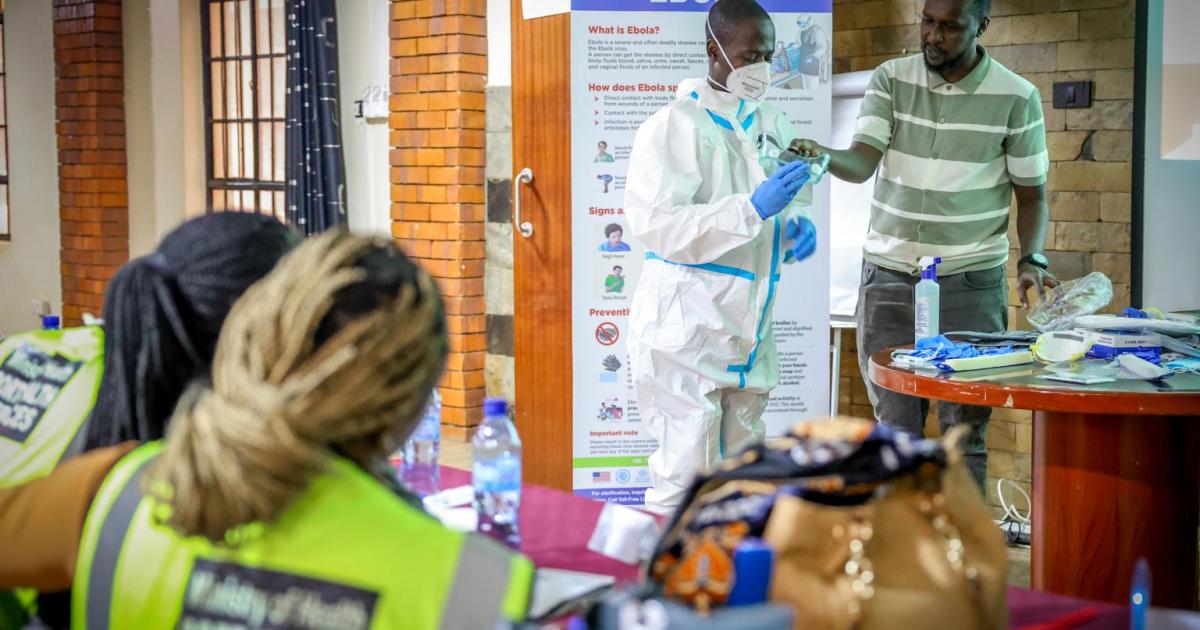
Nairobi – “We knew Ebola was in Congo and Uganda not much more than that,” said Dekens Okoth Ojera, member of the Busia Cross Border Women Traders Sacco, which has 257 registered members. “We were not equipped or aware of how to handle it if it reached us, or sure that anything was being done.”
Kenya has recorded no case of Ebola disease caused by Bundibugyo virus. But transmission in the Democratic Republic of the Congo has not stopped, while thousands of people cross Kenya’s western border every day. Uganda’s outbreak was declared over on 26 August 2026, but movement of people and goods across the region continues.
Busia sits on the Northern Corridor, the trade route running from Mombasa through Uganda to Rwanda, Burundi, South Sudan and the Democratic Republic of the Congo. More than 3,000 people cross here daily, alongside freight moving to and from the region. That constant movement makes border workers and communities an important part of Kenya’s early warning system.
In August, the Kenya National Public Health Institute, with support from WHO and the International Organization for Migration, trained 35 health workers and engaged 45 border stakeholders from three priority points of entry: the Busia and Malaba One-Stop Border P