

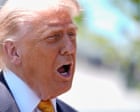
Britain is not entirely in control of its own destiny, from the rising cost of the weekly shop, to the vaulting cost of government borrowing. What is said and done in Westminster matters. But the global backdrop is making life tough, not least in the deeds and words of one man: Donald Trump.
As John Healey drafts his plan for next month’s autumn budget, the perilous economic conditions the chancellor must navigate can be traced back to the door of the US president.
The US-Israel war on Iran is driving up inflation, amid the most serious shock to oil and gas prices of the modern age. The global financial market turmoil this has triggered is adding to the debt servicing costs of governments worldwide, in a situation made worse by Trump’s reckless fiscal policy and threats of interference at the US Federal Reserve.
Meanwhile, there was a grim irony last week as Healey travelled to Coventry for his first big speech as chancellor on the same day that Jaguar Land Rover – with its headquarters just down the road – announced 4,000 job cuts, as Trump’s tariff policies throttle the car industry. The president’s geopolitical posturing and steps to dismantle the post-second world war western security consensus are also adding to pressure on Healey to ramp up defence spending.
In his speech, Healey did not directly call out the source of these economic headwinds sweeping in from across the Atlantic. But he was wistful about the timing of his appointment as chancellor.
“In our British democratic system, if you have the privilege to serve, you don’t get to choose: you don’t get to choose the time, you don’t get to choose the circumstances,” he said.
There are, though, signs of resilience. Last week, the chancellor received a pre-budget boost from figures showing that Britain’s economy unexpectedly shrugged off the worst of the Middle East fallout to grow at a robust pace in July, helped by the rapid expansion of AI.
Far from sitting back and blaming the US for all of the country’s problems, the chancellor also recognises there are meaningful steps that Labour can take to cushion the blow, and to help rebuild confidence.
However, last week was still a bad one, as the latest flare-up in the Iran war drove the oil price to $109 a barrel and fuelled a dramatic bond market selloff. As an open economy in the eye of the storm, the yield – in effect the interest rate – on 10-year UK government bonds, known as gilts, rose to almost 5.4%; the highest level for almost two decades.
The renewed bout of selling pressure in the financial markets could not have happened at a worse time for Healey.
History suggests that the Office for Budget Responsibility (OBR) may need to use the latest gyrations in markets to form the basis of its budget forecast. With this report informing the boundaries of the chancellor’s tax and spending plans, Healey could find himself boxed in.
Back in spring, the Treasury watchdog used the market movements over the 10 working days to 30 January as the input for Rachel Reeves’s spring statement – leaving roughly a month gap before her 3 March Commons set piece. For Healey, there are just over six weeks before his budget on 28 October.
Should the reference period use current market conditions, analysts at Oxford Economics estimate the headroom against the main fiscal rule of £23.6bn – left by Reeves in March – could be halved.
In previous years, the OBR has taken a flexible approach in times of elevated market volatility, and so there is no guarantee this will be the case. There are also other variables that are hard to forecast; from growth to inflation, and from the jobs market to the level of immigration.