

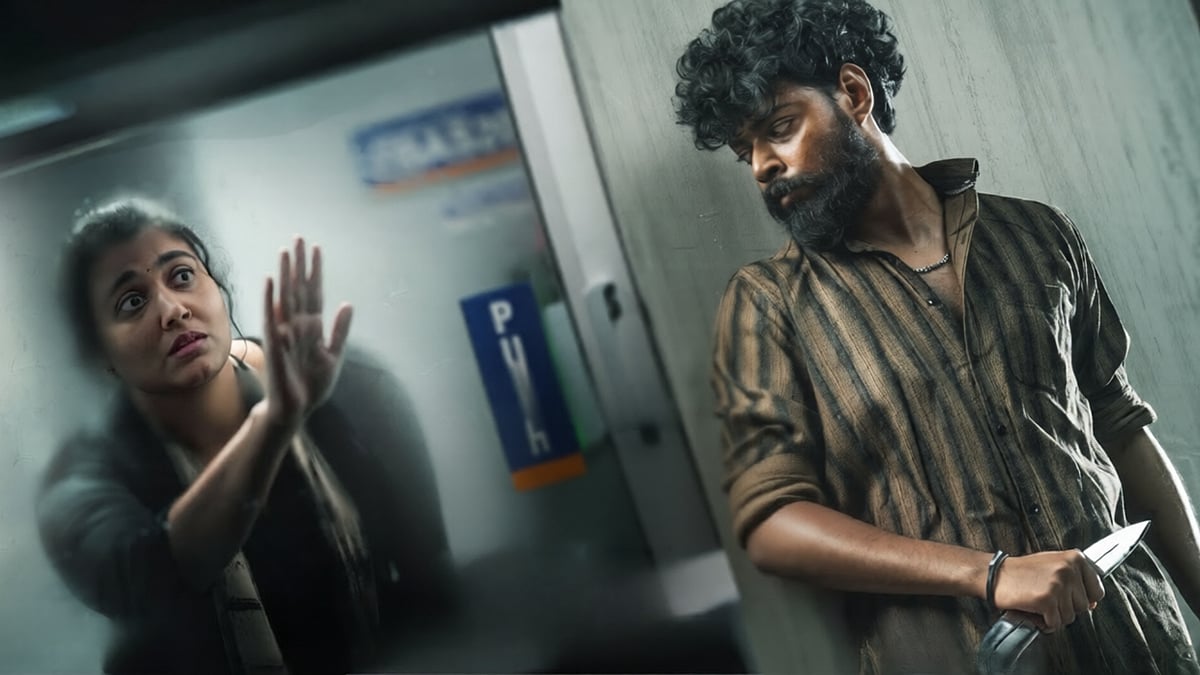
Thudakkam isn’t a film interested in the nuances. The characters and situations are all painted in broad strokes, leaving no room for insightfulness. We have a professional killer who does all things notorious. He snorts some white powder every now and then, eliminates his targets brutally, goes on to grope women in public, stalks them relentlessly, and assaults and kills them when required. Apart from this, we don’t know anything about him. Agreed, backstories for rapists are not integral and can even end up justifying their actions, but we need more than constant stares and deep cigarette inhales. It is so generic that at one point, one can’t help but wonder if he’d scream, “chaaclate caaffee’…
Despite such a shallow character sketch, Aashish does a wonderful job in ensuring the character remains creepy and unpredictably violent throughout. He hardly gets any dialogue in the film, but his silent outbursts make a lasting impact.
Vismaya is equally impressive, especially in the fight sequences. The film initially tries hard to sell her as this chirpy (Chippy plays her mother, by the way), effervescent everyday girl, who, like most heroines, runs terrified to the man of the house at the first sight of lightning and thunder. The screenplay serves information only on a need-to-know basis about Meenu and her passion, which is the right call, considering the big reveal brewing. But for how long? The first half following a missing-person trail is stretched to its limits. Even though the non-linear screenplay keeps throwing in new information about Meenu’s journey and her suspicious disappearance, the tension the characters feel never reaches us.
Some of Jude’s creative calls in Thudakkam are worth discussing, like how he reserves the film’s best moment for the second half even when it could have been the perfect interval block. He instead opts for a tense moment. Similarly, it’s good to see the film spending considerable time with a character who feels violated, patiently underlining her healing journey. It also touches on how public perception can often lead to victim-blaming in our society, but the resolution for this part is shoddily done. Another example of filmmaking
Read More