

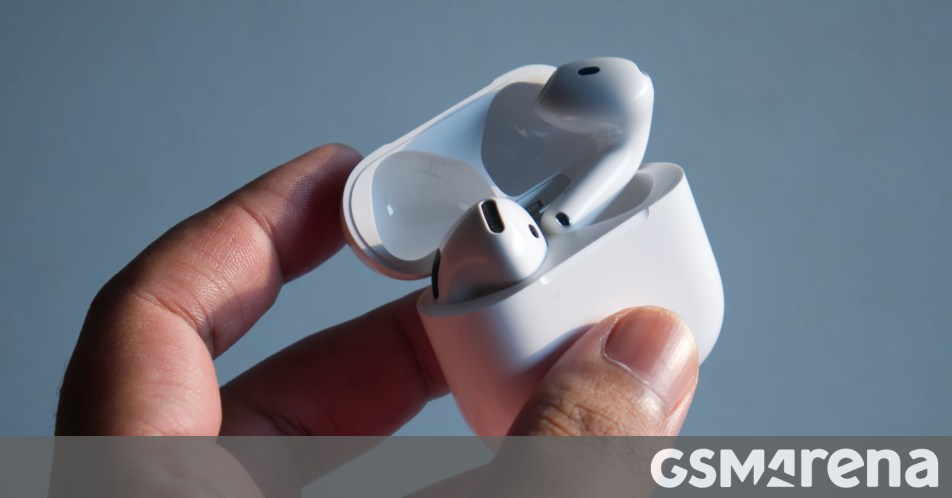
How do you update the most popular audio product in the world? That’s a question that would keep many companies awake at night. But almost a decade after the original launched, Apple has kept the classic AirPods model relevant while turning it into one of the most profitable businesses ever.
The 2026 AirPods 5 keep what people love while improving everything across the board. Better noise cancellation, better audio quality, better battery life, and even better gestures.
But there’s a catch. Only the more expensive $149 model gets all the new features, whereas the cheaper $129 model misses out on many of the things that would justify upgrading to this from AirPods 4. So which model should you be getting? And should you even be buying the AirPods 5 in the first place? Let’s find out.
Design and comfort
Right off the bat, I want to make it clear that a lot of things are common between the standard AirPods 5 model and the AirPods 5 with Wireless Charging Case model. As such, everything mentioned henceforth will apply to both of them, unless stated otherwise.
The design of the AirPods 5 is unchanged from the fourth generation model. Both the earbuds and the case are identical down to the last millimeter. That means there is not much new to say if you’re already familiar with the AirPods 4.
Even if you’re not intimately familiar with that model, most of us have seen what the AirPods look like at some point. The AirPods 5 still have that classic open-ear earbud shape with the short angled stalks. The case is tiny and still has that dental floss hinged top lid that flips open. And all of it is still finished in that same blinding shade of white.
The two variants of the AirPods 5 also have identical dimensions. The only difference is that the case of the wireless charging model is a couple of grams heavier.
Aesthetically, the design is fine, but doesn’t really do much for me. I would appreciate it more if Apple did something interesting with it, like making it transparent or at least in colors that aren’t glow-in-the-dark white. But the company loves its recognizable silhouettes and patterns, so we aren’t going to have any radical new AirPods any time soon.
Functionally, I do have a bone to pick with the design. The small, slippery bits of the earbuds that stick out of the case make them frustratingly difficult to pluck out. The entire body of the earbuds is tiny, particularly the stalks, which also makes inserting and removing them from your ears or the case, or just handling them in general, feel finicky. I don’t remember the last time I dropped any pair of earbuds as often as I did with the AirPods 5.
That conveniently brings us to the build quality, which is pretty good overall. The AirPods 5 are also IP57 rated for dust and water resistance for both the earbuds as well as the charging case.
The AirPods 5 continue to use an open-ear design, which remains a can of worms when it comes to compatibility with different ears. In-ear designs like the AirPods Pro don’t have this problem, as most people have similar-sized ear canals and any differences can be made up for with different tip sizes. However, the AirPods 5 have to sit within the outer ear, and one cursory glance around will show you that nothing about that orifice is consistent in shape or size.
This means how well the AirPods 5 fit in your ears is complete luck of the draw, which won’t just affect comfort but whether or not you can even wear them at all. If your ears are smaller, then the earbuds simply won’t fit. Too big, and they will constantly fall out.
Fortunately, all the AirPods models have always fit my ears like a glove, and the AirPods 5 are no different. This means they sit securely (well, about as securely as open-ears can sit) and are also comfortable. I could wear them for hours and forget I’m even wearing them.
Of course, that may not be the case for you, so you are better off visiting your nearest Apple Store and trying them on for size. The good thing is that since the design is identical to the AirPods 4, you already know how these would fit if you’ve ever tried that model over the past two years.
Software and features
The AirPods 5, like other AirPods models, have been designed for use primarily with Apple products. You can pair them with other Bluetooth audio sources, but many of the features won’t work as intended or at all, and you’d be wasting both your time and money.
Keeping that in mind, it goes without saying that compatibility with Apple products is perfect. When you open the case for the first time, you get the same one-tap pairing pop-up on the screen of your nearby iPhone or iPad that blew minds a decade ago, and remains the benchmark even today. After that, a new menu item appears in the Settings app of your paired device that lets you access all available features. Alternatively, you can also quickly access some functions from Control Center or the Bluetooth menu of your Mac.
AirPods settings
Once the AirPods are paired with your device and associated with your Apple account, they automatically become available on all your other Apple devices using that account. You could be listening to something on your iPhone and then start playing something on the Mac, and the audio will seamlessly transfer over. This can happen with as many devices as you have around, as the handover happens over the internet, and not by having the earbuds be paired to multiple devices at once.
The AirPods 5 surprisingly offer many of the same features as the more expensive AirPods Pro 3 thanks to using the same Apple H2 chip. You get Spatial Audio with head tracking, which can be personalized further for your specific HRTF using the camera on your iPhone. Then there’s personalized volume, which adjusts volume based on ambient noise; conversation awareness, which reduces media volume if it detects you speaking; automatic pausing of media when you fall asleep; head gestures for interacting with calls or notifications by shaking your head; and Find My for locating your lost earbuds.
Audio settings
Apple also recently added an equalizer for use with AirPods models within iOS and iPadOS. It’s rather limited, and only offers three-band adjustability, but it’s better than nothing. Finally, there’s also Live Translation, which translates any nearby spoken audio to the language of your choice. The feature is still in beta and supports eleven languages for now.
Live Translation feature
There are a couple of features that are exclusive to the Wireless Charging Case model of the AirPods 5. The first is a swipe gesture for adjusting volume. For whatever reason, while the standard AirPods 5 model does have a force sensor that detects when you squeeze the stem for other gestures, it cannot detect swipes for adjusting volume that the more expensive model can.
Gestures and other settings
Second, the Wireless Charging Case also has a built-in speaker. Other than emitting soft beeps when the battery is low or when you plug in the charger, it can also produce loud beeps when you lose the case and use Find My. This means you can find your earbuds and case separately, or when the earbuds are inside the case, making the Find My feature vastly more useful.
Compared to the AirPods Pro 3, most of the features that are missing on the AirPods 5 are related to the more advanced noise canceling and transparency modes on the former. Features like hearing tests, hearing aids, and hearing protection are absent from the AirPods 5 as they simply wouldn’t work as well with the open-ear design. Then there’s also the heart rate monitor that only the Pro model has. Finally, the AirPods Pro 3 case also has an ultra-wideband chip inside, which makes locating with Find My even better.
Performance
Audio quality
The AirPods 5 have a vented “custom high-excursion Apple driver” and a “custom high dynamic range amplifier”, and that’s the extent of information we have available on the audio system from Apple. The earbuds use Adaptive Audio, which adjusts the audio in real time to compensate for different ears and fits to ensure consistency in sound, and it’s enabled at all times. The earbuds use standard AAC over Bluetooth 5.3.
The AirPods 5 audio quality is remarkable for what Apple is able to achieve with this design. Anyone who has used open-ear earbuds knows that there is no way to get consistent sound with these, and yet Apple is able to brute-force them into producing more than passable sound by strapping tiny computers to them.
Bass is an area of weakness for open-ear designs as a result of having to deal with near-infinite volume of air between the driver and the eardrum. Apple uses Adaptive Audio to map the shape of your ears and uses the feedback from the internal mics to tune the bass until you are hearing what it wants you to hear. You can even hear this in action for a split second when you first wear them, and the media starts playing.
Is it successful? Yes, but within reason. It’s not possible to excite that much air with an open-ear design no matter how custom or high excursion your driver is, so the low bass notes cannot be hit with any effectiveness. The go-to option then is to boost the mid and upper mid bass frequencies. This is reasonably successful, especially if you’re not overly familiar with what you’re listening to, but if you are, then you would notice that the lowest notes aren’t being registered.
Boosting mid and upper bass to compensate for the sub-bass also makes the sound a bit boomy. This is more prominent at lower volumes, as the AirPods 5 do the thing AirPods do, which is that they compensate for the loss of bass energy at lower volumes by artificially boosting it. At higher volumes, the bass on the AirPods 5 does, however, drop off more aggressively than it does on the AirPods Pro 3 to avoid overdriving and bottoming the driver.
The mids on the AirPods 5 are relatively tame. The lower mids are slightly overshadowed by the upper bass, which can flow over a bit. The upper mid-range, however, isn’t as prominent as it could be.
This then flows into the treble, where the lower “presence” ranges of the treble are rather dull on the
Read More