

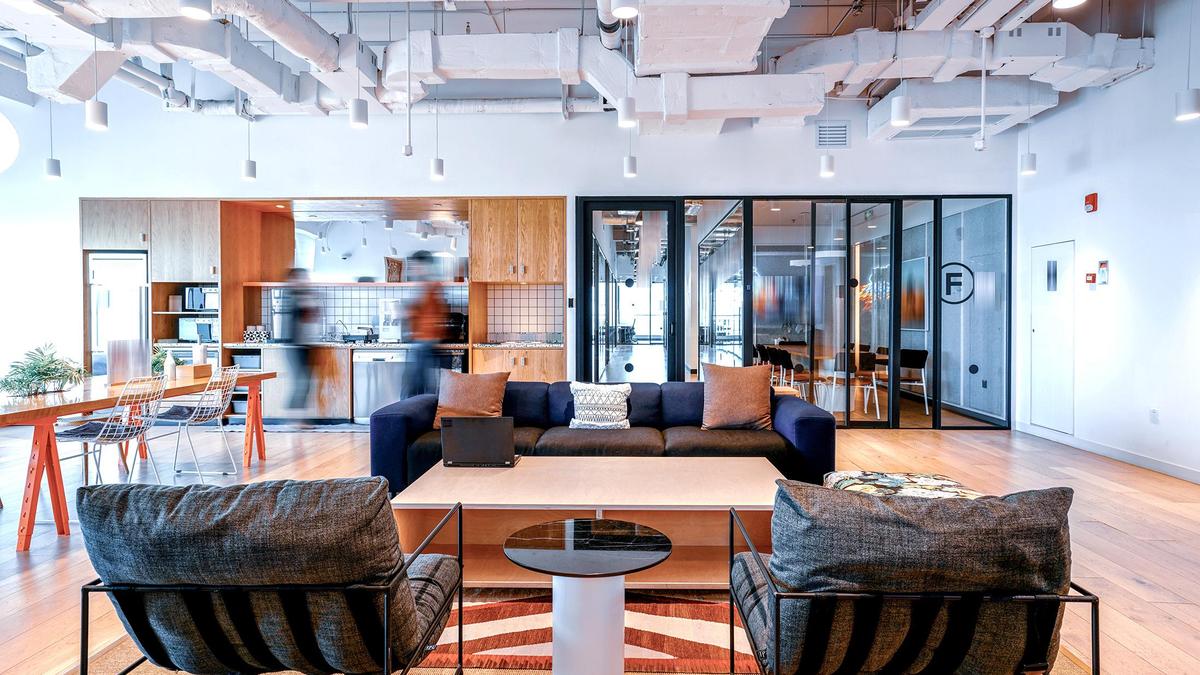
Modern style office lobby with bright Windows, wood floors, comfortable sofas and more.
| Photo Credit:
AUGUST0802
About 260 million sq ft of additional office space will be required in the top eight cities to achieve a density benchmark of 100 sq ft per employee, according to Cushman & Wakefield.
Real estate consultant Cushman & Wakefield on Thursday released a report, ‘The Talent Blueprint: Talent Drives, Office Follows’.
“At a workplace density benchmark of 100 sq ft per employee, our research estimates a potential additional office space requirement of approximately 260 million sq ft across India’s top eight markets alone,” said Anshul Jain, Chief Executive, India, SEA, MEA, and APAC Office & Retail at Cushman & Wakefield.
For India’s commercial real estate sector, he said this presents a long-term opportunity to build not just for the growth of businesses, but for the changing nature of global business itself.
The top eight markets are Mumbai, Pune, Bengaluru, Hyderabad, Chennai, Delhi-NCR, Kolkata and Ahmedabad.
India’s eight largest office markets currently hold about 1,012 million sq ft of Grade A and B office inventory, accommodating 12.7 million professionals.
This translates into an average office space density of around 80 sq ft per professional.
At a benchmark of 100 sq ft, the same workforce would require around 1,272 million sq ft of office inventory.
This means there is an additional requirement of 260 million sq ft, the consultant said.
“India’s office market is backed by one of the most powerful structural growth drivers – its talent ecosystem. The country’s ability to offer talent at scale, combined with affordability and operational scalability, established India as the ‘office of the world’,” Jain said.
The talent ecosystem is also evolving, he added.
“Even as AI (artificial intelligence) transforms businesses globally, India is strengthening its relevance through specialised skills and higher-value capabilities,” Jain said.
He noted that there is a significant headroom for growth in India’s
Read More