

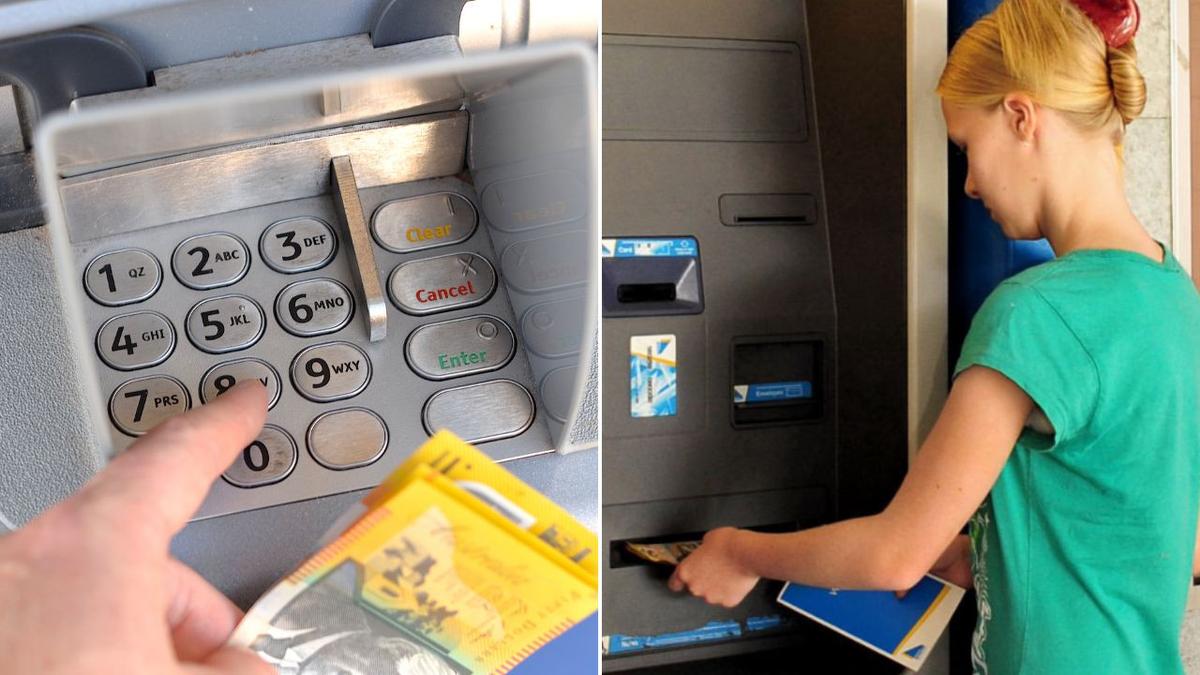
Pro-cash advocates plan to have ATMs running hot and spitting out note after note as part of an ongoing fight to keep physical currency alive.
The 2026 edition of Cash Out Day will be held on Tuesday, April 28, and one of its key voices argues it is another vital step to reinforcing that not everybody is happy to shift to digital or tap-and-go payment methods.
“Cash users have had plenty of bad news recently, like the world’s weakest cash mandate passing the senate and the announcement of an end to card surcharging, which will raise prices for everyone,” Cash Welcome campaigner Jason Bryce told 7NEWS.com.au.
Know the news with the 7NEWS app: Download today Arrow
“I think Aussies need to show the PM and the banks that cash is important to all of us as a reliable, private, surcharge-free payment option.”
Those partial to notes and coins have riled against the shift towards digitised payment options in recent years.
‘Vote no to a cashless society’ Campaigners have used Cash Out Day to vote “no” to a cashless society, which is where they fear Australia is headed given the ongoing bank and ATM closures.
The pro-cash community claimed more than $500,000 was withdrawn as part of their protest in 2024, although the Australian Banking Association (ABA) disputed it actually made any material impact.
Bryce, who was bumped from several media opportunities to promote last year’s event by the death of Pope Francis, conceded 2025 did not live up to expectations.
He believes too that the government’s cash mandate for fuel and groceries may have blunted a sense of urgency for the cause .
The goal of Cash Out Day is to drain ATMs across the country, sending a clear message that notes and coins remain popular with Australians who do not want to make the complete shift to digital payment methods. Credit: AAP Bryce hopes as many as two million Australians will head to an ATM to fill their wallets and purses with actual cash on April 28.
Australians made more than 25.5 million cash withdrawals from ATMs in February, down on the 26.1 million at the same time in 2025 and the 53.7 million ten years ago, RBA data shows.
How we use cash has changed too. Where we would hand over notes and coins for 70 per cent of payments in 2007, that dropped to just 13 per cent in 2022.
The shift away from cash was accelerated during the COVID-19 pandemic and the ABA has previously forecast consumer payments using physical currency could drop to just four per cent by 2030.
Cash ‘isn’t going anywhere’ The Reserve Bank of Australia’s Payment System Board has backed calls to keep cash in circulation but acknowledged the challenges of distributing it, including the cost of transportation.
“Access to cash remains vital for many Australians, particularly in regional and remote communities,” the board said in an update from its March meeting,
“Members acknowledged the importance of the long-term sustainability of the cash distribution system and expressed support for the proposed regulatory framework for providers of cash distribution services.
“The framework would include crisis powers for the public sector to assist in managing risks to the continuity of cash distribution services across Australia.”
National Seniors Australia ran flagship campaign Keep Cash in March, aiming to ensure it remains and highlighting the impact of bank closures and ATM removals, especially for regional and remote communities.
“We are pleased to see the RBA acknowledge the importance of cash and the long-term sustainability of the cash distribution system,” NSA chief executive Chris Grice said.
ABA chief executive Simon Birmingham said that while digital payment methods are “first choice” for most Australians, “banks will continue to support those who still use cash”.
“People are free to do as they please with their money, but cash isn’t going anywhere,” Birmingham told 7NEWS.com.au.
“It remains accessible every single day, and there is no need for anyone to make unnecessary withdrawals.”