

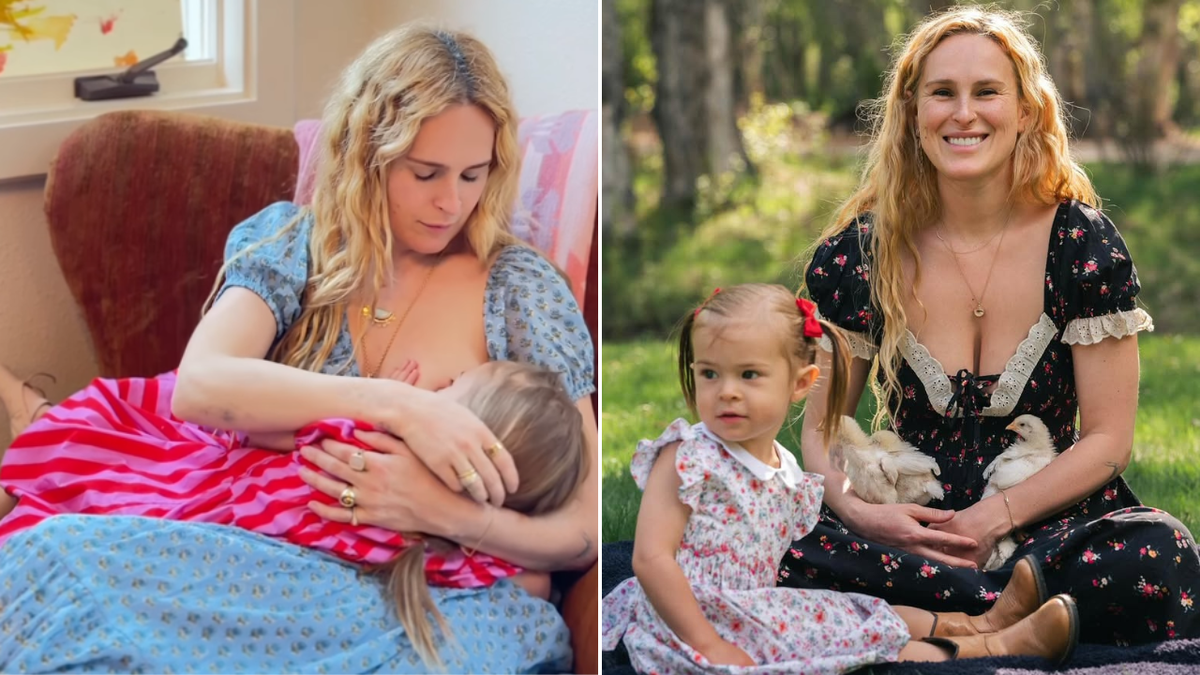
The daughter of actors Bruce Willis and Demi Moore has hit back at criticism over her parenting.
Rumer Willis, 37, responded to negative comments about her decision to breastfeed her nearly three-year-old daughter, Louetta.
Earlier this month, Rumer shared a video of herself breastfeeding, captioned: “Sorry, not sorry.”
Know the news with the 7NEWS app: Download today Arrow
In October last year, she also posted a photo on Instagram showing herself nursing Louetta — who she had with her ex-partner Derek Richard Thomas — while sitting on a couch.
While many people supported her choice, others questioned whether her daughter was too old to still be breastfeeding.
“In my opinion, breastfeeding at that age is more for mum than the child,” one person commented.
But is that actually true? And is there a “right” age to stop breastfeeding?
How old is too old to breastfeed? An expert weighs in after Rumer Willis faces criticism for feeding her nearly three-year-old daughter. Credit: Instagram Rumer Willis (left) with her famous father Bruce Willis, who is now living with frontotemporal dementia. Credit: Instagram According to Australian Breastfeeding Association (ABA) information manager Alexandra Shanks, there is no recommended upper age limit.
“Around the world, health authorities recommend continued breastfeeding alongside nutritious complementary foods at least until the child is two years old, or for as long as mum and baby wish,” Shanks said.
“When to wean is a personal decision for each mum and her child.”
Breastfeeding beyond toddlerhood is common Research suggests the natural age for weaning falls between two and seven years.
“Breastfeeding beyond toddlerhood is common in many countries and cultures,” Shanks said.
“There’s no evidence that prolonged breastfeeding has any negative effect on these mums and babies.”
‘Babies need to feed frequently and cannot wait for a convenient time or place.’ Credit: Getty In fact, many health benefits increase the longer breastfeeding continues. These include a reduced risk of ear and chest infections, diarrhoea, obesity, type 2 diabetes and childhood leukaemia.
The ABA also notes benefits for mothers, with longer total breastfeeding duration linked to a lower risk of breast and ovarian cancer, type 2 diabetes, high blood pressure, heart disease and stroke.
“Every extra month of breastfeeding adds to this protection,” Shanks said.
“Breastfeeding also helps children form secure attachments, which fosters their independence as they grow.”
Stigma linked to misunderstanding Despite these benefits, stigma around breastfeeding older children, and breastfeeding in public, remains widespread.
Shanks believes this largely comes down to misunderstanding.
“Babies need to feed frequently and cannot wait for a convenient time or place,” she said.
“In addition, breasts are often viewed in our society as sexual rather than reproductive, leading some people to believe breastfeeding should be done in private.”
She added when stories like Rumer Willis’ bring attention to the issue, it’s “alarming” to see how many people remain unsupportive.
“This reinforces misconceptions about breastfeeding rights, undermining the legal protections in place and creating an environment where mothers may feel discouraged from breastfeeding when and where they need to,” Shanks said.
“Breastfeeding in public is legally protected in Australia, no matter the age of the child.”
The ABA is working to create a more breastfeeding-friendly nation through its programs, which provide resources, training and guidance to organisations and communities.
It partners with community groups, health services and workplaces to promote supportive policies and practices.
“Our ultimate goal is to empower mothers and support them in their breastfeeding journey in every aspect of their daily lives,” Shanks said.
It’s also important to note not all women are able to breastfeed or exclusively breastfeed — something that can carry significant emotional impact.