

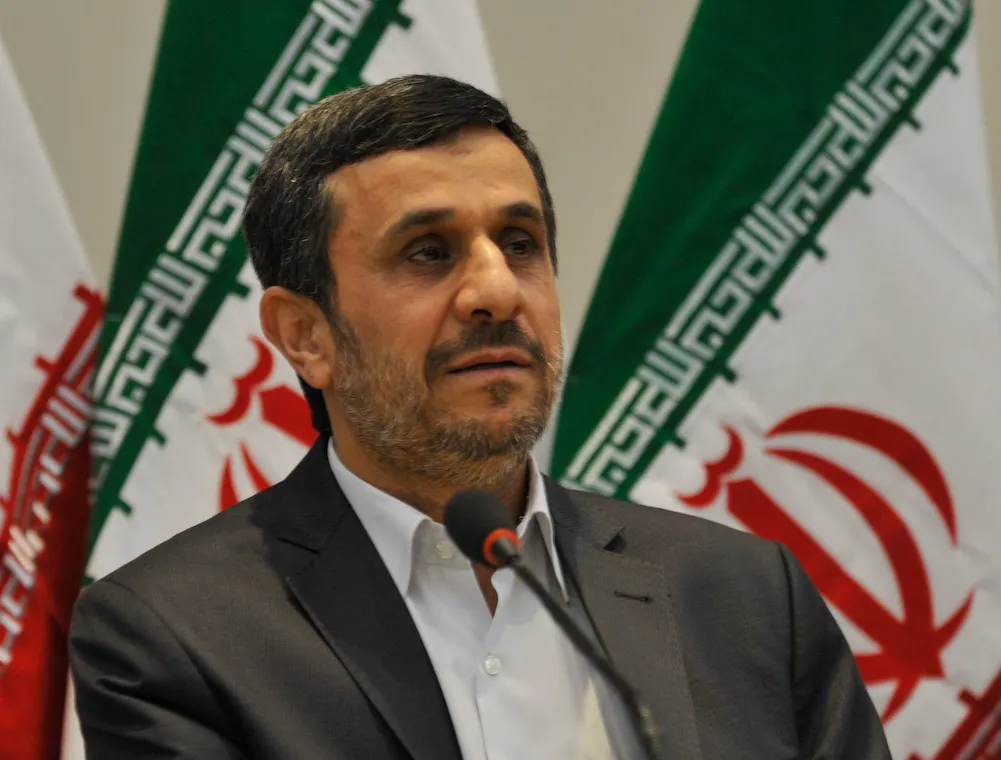
The two visits of former Iranian president Mahmoud Ahmadinejad to Budapest may have been far more than academic engagements, according to a bombshell report by The New York Times.
Citing American, Iranian and former Israeli officials familiar with the matter, the newspaper claims the conferences hosted by Hungary’s Ludovika University of Public Service served as cover for secret meetings between Ahmadinejad and Israel’s intelligence agency, Mossad.
The report alleges that Israel spent years attempting to cultivate the controversial former Iranian leader as a potential intelligence asset and even envisioned him as the figure who could replace Iran’s ruling regime if an opportunity arose.
Climate conference allegedly used as cover
Ahmadinejad’s appearance at Ludovika University in Budapest in 2024 attracted international attention at the time, largely because of his long record of anti-Israel rhetoric, Holocaust denial and confrontational foreign policy during his presidency between 2005 and 2013.
According to The New York Times, however, the climate change conference itself was allegedly organised primarily to provide a legitimate reason for Ahmadinejad to travel to Hungary and meet Israeli intelligence operatives away from Iran.
The newspaper reports that Ludovika University’s rector, Gergely Deli, was personally approached by a senior Hungarian government official and asked to organise the event and invite Ahmadinejad. Deli reportedly understood the visit could damage both his own reputation and that of the university but agreed because he believed facilitating dialogue between bitter enemies could potentially save lives.
In an interview cited by the newspaper, Deli described himself as having acted as a “frontman” for a much larger operation.
Budapest meetings reportedly included Mossad chief
Perhaps the most striking allegation concerns David Barnea, then director of Mossad. Former American officials told the newspaper that Barnea personally travelled to Budapest during Ahmadinejad’s 2024 visit to meet the former Iranian president.
The report further claims Mossad later informed the CIA that it had established contact with Ahmadinejad. Israeli intelligence allegedly financed some of the former president’s travel and accommodation in recent years, while operatives reportedly met him during several overseas trips, including both of his visits to the Hungarian capital.
Ahmadinejad returned to Budapest in June 2025, only days before Israel launched its military campaign against Iran. According to the report, Iranian security personnel accompanying him later complained that he disappeared for lengthy periods after shaking off his bodyguards on at least two occasions. When questioned, he reportedly claimed he had been meeting university professors.
A dramatic regime-change plan
The Budapest meetings were allegedly part of a much broader Israeli strategy. According to The New York Times, Israel believed Ahmadinejad had become increasingly disillusioned with Iran’s ruling establishment after being barred from standing for president again and marginalised by Supreme Leader Ayatollah Ali Khamenei’s circle.
Officials cited by the newspaper claim Israeli planners hoped Ahmadinejad could eventually lead a post-regime Iran that would normalise relations with Israel and join the Abraham Accords. The plan reportedly reached its climax in late February this year, during the opening days of the US-Israeli war against Iran.
The newspaper alleges that following an Israeli airstrike near Ahmadinejad’s Tehran residence, Mossad operatives transported him to a secret safe house inside Iran in an attempt to launch a wider regime-change operation. However, the operation ultimately failed. According to officials cited in the report, Ahmadinejad became unhappy with the plan and later left the safe house under circumstances that remain unclear.
Read more: Suspected Russian operatives held at Hungarian border ‘may have been plotting bombing in Germany’ — authorities tight-lipped
Hungary’s role remains unclear
The allegations raise fresh questions about Hungary’s involvement. At the time of Ahmadinejad’s first visit, Viktor Orbán’s government maintained particularly close relations with Israel, with frequent high-level exchanges between Budapest and Jerusalem. Israeli Prime Minister Benjamin Netanyahu himself later visited Ludovika University in April 2025.
When Ahmadinejad’s invitation first sparked controversy in Hungary, the Hungarian government insisted universities enjoyed academic freedom and that it did not interfere in their programmes. The new report, however, alleges senior government figures actively encouraged the invitation as part of an international intelligence operation.
Neither Mossad nor Ahmadinejad’s representatives commented on the allegations. Israeli authorities have also declined to publicly discuss the alleged operation, while many of the newspaper’s claims rely on unnamed American, Iranian and former Israeli officials familiar with the purported intelligence effort. No independent evidence has yet been made public to corroborate the full account.
Read also: Trump, Ukraine and Europe’s defence race: Why Hungary could be the unexpected winner