

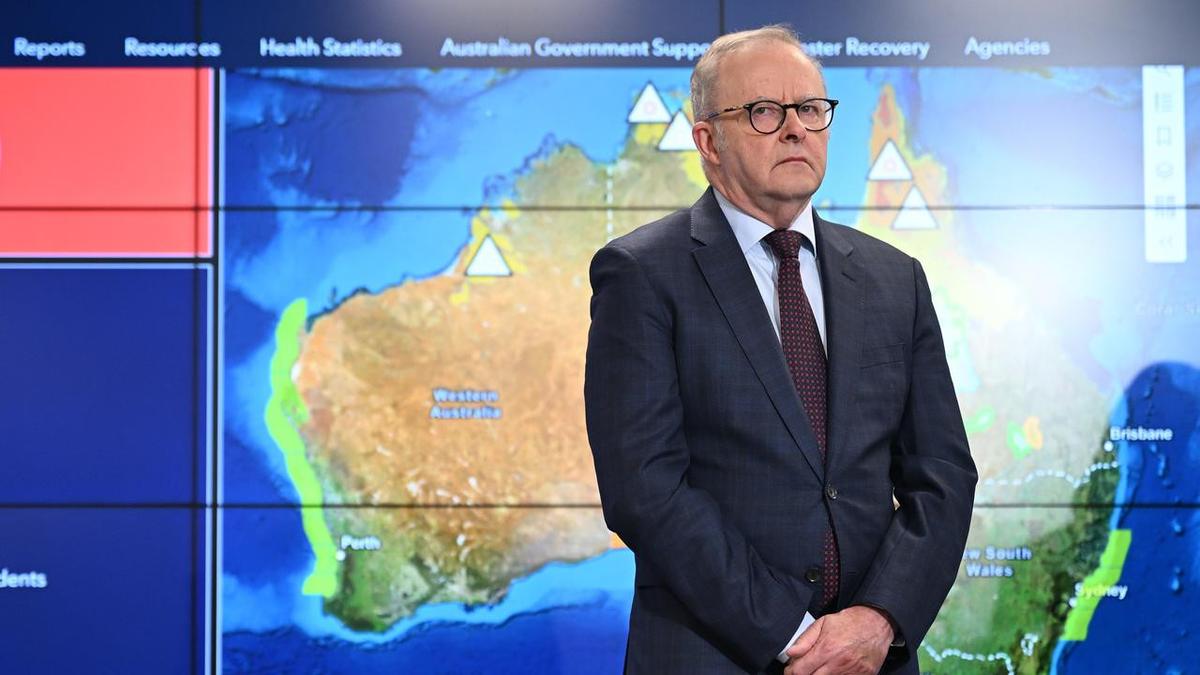
The nation is facing a “very tough summer” with bushfire assistance ramping up, despite some parts of the country being blanketed by snow.
Prime Minister Anthony Albanese said on Monday, November 9, that Australia was “well and truly” into the high-risk weather season, intensified by a super El Nino.
The prime minister spoke to media in Canberra as he announced new funding for bushfire risk management and emergency responders’ mental health, ahead of what he warned could be a “very tough summer”.
Know the news with the 7NEWS app: Download today Arrow
The funding package for the Australian Fire Danger Rating System and the National Bushfire Intelligence Capability, was announced just a day after Cooma, Jindabyne and Thredbo in NSW and alpine areas in Victoria recorded around up to 10 centimeters of snow.
An east coast summer cold-snap saw temperatures plunge below zero on Monday morning in Victoria, New South Wales, Tasmania and the ACT “after an unseasonably cold November weekend”, according to Weatherzone.
Though northern parts of Queensland, Darwin and Broome were experiencing extreme heatwaves.
Snow blanketed parts of Australia weeks out from summer, across November 7 and 8. Credit: Madeleinemcvie/Madeleinemcvie/TikTok Albanese said Australia often had to deal with multiple extreme weather events at the same time, citing recent flooding in Queensland and fires in the Northern Territory.
“These events can have a massive impact, obviously, on human life in the worst circumstances, but also on our economy and on our capacity to engage across the country,” Albanese told reporters at the National Emergency Management Agency in Canberra.
Climate change was contributing to clear patterns of extreme weather, the prime minister said, while cautioning that no individual event could be attributed solely to climate change.
Be the first to know:
Aerial firefighting fleet beefed up The prime minister also pointed to additional funding for the national aerial firefighting fleet, record levels in the national emergency management stockpile and work with telecommunications companies to maintain communications during emergencies.
Disaster management and response was the fastest-growing area of government expenditure in the previous financial year, rising 280 per cent from 2024-25 to 2025-26, Albanese said.
“I want to be clear: the advice is this could be a very tough summer indeed,” he said.
He linked the increasing pressure on disaster response to the need for both readiness and mitigation, saying the government would support people affected by disasters.
Albanese urged people to be prepared in the event of an emergency by packing an emergency kit, making an evacuation plan, enabling alerts, and following local authorities’ advice.
Aussies without a severe weather plan It comes as a new survey has found 75 per cent of Australians do not have a severe weather or bushfire plan in place.
The Allianz’s Summer Risk Report 2026 revealed the company has recorded $385 million nationally in home and motor claims costs during summer 2025-26, while storms were the biggest driver of home insurance claims nationally, accounting for $107 million in claims costs.
“When we talk about hundreds of millions of dollars in summer claims, it’s important to remember there are people and families behind those numbers, often dealing with damage to their home, their car,” said Luke Whenman, Chief Claims Officer, Allianz Australia.
“We know we can’t prevent everything from going wrong, but being prepared can help reduce the risk and lessen the impact when the unexpected does happen.”