

Adulting
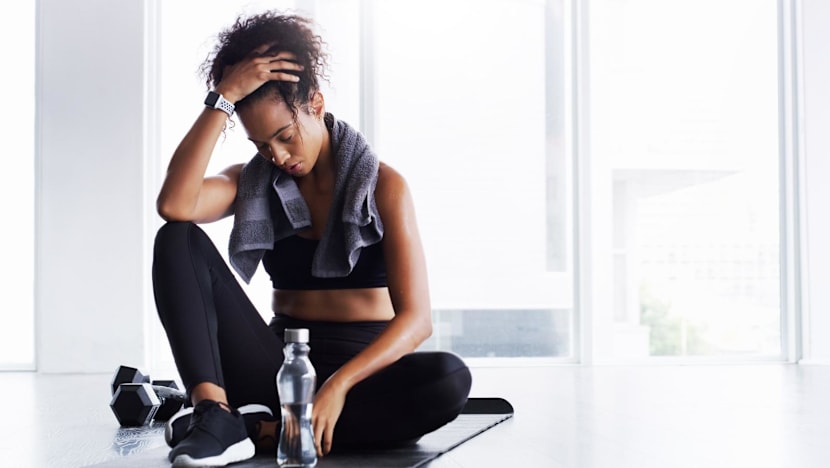
From packed workout schedules to expensive classes to social media pressure, some working adults are pushing themselves to the limit in the pursuit of health, which in turn causes more stress on their bodies and in their daily lives than necessary.
Some working adults who only have a few hours to spare after work may find it challenging to hit fitness targets. (Photo: iStock)
New: You can now listen to articles.
This audio is generated by an AI tool.
Adulthood is not just one phase of life but comes in stages. Its many facets can be overwhelming, from managing finances and buying a home to achieving work-life balance and maintaining healthy relationships. In this series, CNA TODAY’s journalists help readers deal with the many challenges of being an adult and learn something themselves in the process.
Every morning at the crack of dawn, Mr Jasper Goh heads to the gym near his home. However, the 32-year-old’s self-imposed “rain or shine” routine doesn’t end there.
After work, the sales manager at a car company attends Muay Thai classes for his second workout, even if it comes at the expense of his social life or sleep.
For Ms Jessalin Tan, staying fit takes on a more buffet approach. The 27-year-old management associate in business strategy populates her calendar with a variety of activities, ranging from runs and gym sessions to pilates and spin classes.
Both Mr Goh and Ms Tan look forward to their exercise sessions, but they also admitted that it was sometimes tiring to keep up with their routines.
“It’s hard to sustain because I’m working in the sales industry,” Mr Goh said. “At times, there are sales appointments after 6pm that I have to attend to, which means I end up going to the gym late at night.”
Mr Goh’s healthy lifestyle is also costly to maintain – he spends almost S$500 a month on his gym membership and Muay Thai classes and spends hundreds more on training equipment and shoes.
Similarly, Ms Tan finds her “super-duper packed schedule” mentally stressful and physically taxing at times, especially when she squeezes in gym workouts during lunchtime or stacks multiple exercise classes in a day.
Mr Yen Wong, co-founder of The Garage gym, who has been in his line of work for close to 10 years, said he has seen many younger people such as Mr Goh and Ms Tan push themselves to their limits to achieve their fitness goals.
He also said that despite the trainers’ best efforts to accommodate their clients’ schedules – by making sessions as convenient and efficient as possible – some members still find it difficult to keep up.
GETTING CAUGHT UP WITH TRENDS The term “getting fit” usually conjures up images of personal training sessions, spin classes or completing a marathon.
However, health experts said that if you have to juggle a complicated exercise schedule or spend exorbitant amounts for classes and gear, it is generally unnecessary.
They also noted that many people’s perceptions and expectations of fitness are greatly influenced by social media, including posts by influencers or targeted advertisements.
Ms Jackie Wong, founder of SimpliBeing, a counselling and psychotherapy clinic, said: “When you browse exercise-related content, you will start to receive even more. It could be from the sponsor of a sportswear brand, or from influencers.”
This repetitiveness in social media platforms’ algorithms could reinforce rigid definitions of health and fitness, which are skewed in favour of brands, Ms Wong warned, thereby compelling some people to mirror the influencers’ ways without first assessing their own suitability.
Ms Isobel Tan, senior clinical psychologist from The Psychology Atelier, warned that this is especially dangerous because influencers and well-known personalities often attain such low body fat levels through extreme dehydration, dieting and rigorous personal training.
Dr Lin Hong-hui, principal clinical psychologist from The Psychology Atelier, said that as a result, attempts to match up to such unrealistic – or even deceptive – fitness standards could foster feelings of inferiority and self-doubt, where “we feel like we are never, ever measuring up and we feel very poorly about ourselves”.
In addition to the psychological impact, there are physical risks associated with following online fitness trends.
The experts cautioned that some activities may not be suitable for all individuals, and may even result in over-exertion or injury for some people.
This is often due to their high intensity and specificity in the muscle groups trained.
Ms Nur Amelina Azlan, a physiotherapist at Heal360 Physioclinic, said: “For example, pilates is very postural, very focused on the core muscles, whereas something like your spin class is more cardiovascular.
“But what we need is both elements together, not just one over the other.”
MAKING FITNESS “FIT” YOU So, if what works for other people may not be the best for different people with different needs, how does one find what works for oneself?
Mr Martin John, clinical director at Orchard Health Clinic, which offers physiotherapy among other services, said that the first step is to be honest about your starting point.
“How is your energy? How is your sleep? How stressed are you? How much do you sit? How well do you move?
“Those are important questions because exercise should match the person, not the trend.”
If people are already running on empty with poor sleep, work pressure, relationship stress, anxiety and long hours, and then they stack intense exercise on top of these, “they are often not building fitness anymore”, Mr John added.
“They are simply adding more strain to an already overloaded system.”
In such cases, it is critical to listen to your body’s signals and prioritise adequate rest, he highlighted.
“So the goal is not choosing the most impressive exercise.
“It is choosing the exercise your body can consistently recover from and positively adapt to.”
For many people, this may take the form of functional training.
Mr Wong from The Garage explained that this is targeted training that helps people navigate daily activities such as carrying a bag, going up the stairs or getting up from a low stool, so that they can do these with agility and minimal pain.
“The idea of functional training here is that fitness is with you forever. It’s about maintaining and incorporating fitness into your life for the longest possible time,” he emphasised.
Health experts point to daily physical activities such as climbing the stairs as part of the foundation to building fitness. (Photo: iStock)
Ms Amelina the physiotherapist said that for someone who has been sedentary for a long time, the best and “most realistic first step” for functional training is often about increasing everyday physical activity.
“This includes things like walking to the bus stop, doing housework, taking the stairs, carrying groceries or playing with kids,” she said.
She also said that once consistency in this area has been established and the person’s body has had the chance to slowly increase its capacity for stress and recovery, they can then begin experimenting with higher-intensity exercises.
In particular, she recommends undertaking multi-component exercise, which includes resistance training, aerobic exercise and balance training.
For a healthy adult, the moderate-activity goal can be fulfilled by 30-minute sessions of brisk-walking, cycling at a comfortable pace, swimming or recreational sports a few times a week, she suggested.
Moderate activity refers to exercise that raises your heart rate while still allowing you to hold a conversation comfortably.
So the goal is not choosing the most impressive exercise. It is choosing the exercise your body can consistently recover from and positively adapt to.
Vigorous activity includes exercises that significantly increase breathing and heart rate, such as fast running, competitive sports or high-intensity interval training (HIIT), Ms Amelina said.
These recommendations align with the Singapore Physical Activity Guidelines by Sport Singapore and the Health Promotion Board, which stipulate at least 150 to 300 minutes of moderate-intensity aerobic activity or 75 to 150 minutes of vigorous activity a week, alongside two or more sessions of strength training.
Having said that, the experts collectively underscored that such guidelines are flexible and should be adjusted according to age, lifestyle and medical condition.
Mr Wong from The Garage advised people who have been doing vigorous exercise consistently against persistently overloading without enough rest.
He said that he had to tell clients who were going to the gym six or seven times a week to cut it down to four times and to “space yourself out”.
“We always discourage them from coming to (training) classes daily. There’s no point coming every day. There’s no recovery.
“It’s almost like you’re killing yourself slowly … It’s really not a sprint they’re looking at.”