

Our product picks are editor-tested, expert-approved. We may earn a commission through links on our site. Why Trust Us?
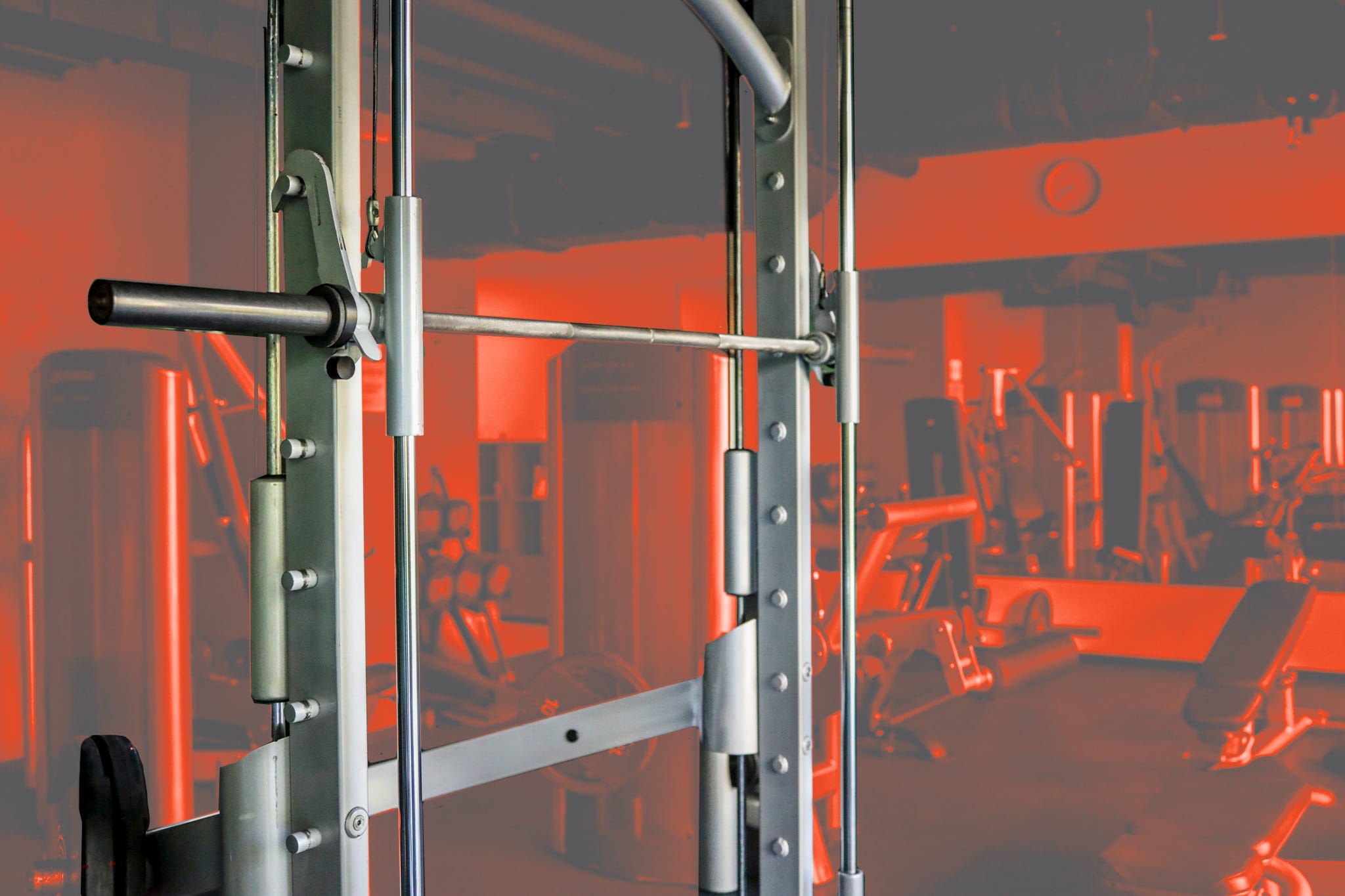
FOR MOST OF recent gym history, Smith machines, the fixed-barbell weight racks commonly found in big box gyms and hotels, have largely been neglected to the status of four-figure dust collectors. One reason is that different fitness factions, from powerlifters to strongmen to functional fitness athletes, prefer using free weights and other implements (like sandbags, kettlebells, and clubs). With its promise of stability, gym bros viewed the Smith machine as a waste of space at best—or the wussy version of a “real” barbell at worst.
Things have changed. Over the last few years, some of the biggest voices in the evidence-based lifting world—including Dr. Mike Isreatel, Jeff Nippard, and Milo Wolf—have helped shift the Smith machine’s reputation from weight-room punchline to one of the most prized tools for targeting key muscles with scalpel-like precision.
The question for you, dear everyday gym-goer: Where does the Smith machine fit in your routine to achieve your goals? The implement can absolutely help you build muscle, train hard without a spotter, and make certain exercises feel smoother and more stable—but those same qualities can become drawbacks if you start using it as a replacement for every squat, press, and row in your program. Let’s dig deeper into the Smith machine, explore its history and study what’s driven its current resurgence, to determine how much it should factor into your programming.
History of the Smith Machine
IN THE EARLY 1950s, fitness pioneer Jack LaLanne created an early version of what would become the Smith machine so he could train with a barbell more safely when he didn’t have a spotter. Rudy Smith, then working in the Vic Tanny health club ecosystem, saw the apparatus, worked with machinist Paul Martin to improve it, and installed the modified version at a Vic Tanny gym in Los Angeles. By the end of the decade, Smith became an executive at the growing health club chain, and the machine eventually carried his name.
“The Smith machine’s history almost perfectly mirrors its reputation,” says Dr. Conor Heffernan of Ulster University, fitness historian and author of the Physical Culture Study website. “It began as a promise of safety and control, then became a symbol of everything serious lifters disliked about machines, and now it seems to be returning because those same qualities are being revalued.”
The qualities being revalued are the same ones lifters used to mock: the stability and control offered by the design. Unlike a free barbell, the Smith machine locks the bar onto rails, which means it can only travel along a set path. Smooth, stable lifts often give people more confidence, letting them push closer to failure on certain compound lifts. Simultaneously, though, this added stability can hurt your training for certain fitness goals.
“Any piece of exercise equipment has its place, but it’s got to be used correctly and for the right thing—not because you’re afraid of free weights,” says Alex Rothstein, an exercise physiologist and program coordinator of exercise science at the New York Institute of Technology.
What The Smith Machine Does Well
MOST OF THE creators and trainers pushing the Smith machine are bodybuilders and physique-focused lifters. That tracks, since the Smith’s built-in stability and racking mechanisms let lifters better target the muscle they’re training and push their sets to or close to failure (and taking your training close to failure is key to adding muscle tissue).
Take the incline bench press. With a standard barbell, you have to control the bar as you move it up and down, making sure it doesn’t drift too far forward or backward as you lower it to your chest and press it back up. That stability demand isn’t a bad thing to contend with—and it means your shoulders, triceps, and smaller stabilizing muscles are all contributing to the lift.
The fixed bar path of a Smith machine lets you set the bench and your body so the bar travels along a consistent line. By removing instability from the equation, you can focus on directing all your force vertically and driving the weight directly upwards.
And if you stop your set right before fatigue (with 1 to 2 reps in reserve), you should also be able to re-rack the bar on a Smith machine, eliminating the need for a spotter. Research has found a link between training close to failure and muscle growth, so the ability to keep banging out reps without much risk of losing control of the bar is another reason why the Smith is having a revival among physique-focused lifters.
The fixed bar path of the Smith machine is especially valuable on nuanced but heavy lifts that are meant to target smaller muscle groups. Take the JM press, a triceps move you can do with dumbbells or barbells. This move requires you to shift your elbows forward as far as possible as you lower a weight to your shoulders, and when done correctly, it creates major tension on your triceps as they’re lengthening.
“Done with free weights, you’ll often turn this into a close-grip press, because it’s challenging to shift the load back toward your chest as you lower,” says MH fitness director Ebenezer Samuel, C.S.C.S. “Done in a Smith machine, you can set up with the bar directly above your clavicles, allowing you to focus on shifting your elbows in front of you as you lower. The result: A much more focused triceps stretch.”
What the Smith Machine Doesn’t Do As Well
BUT WHAT MAKES the Smith machine effective for hypertrophy (muscle building) also makes it problematic for the general population, who often need to build stability and coordination before focusing on “targeting” specific muscles. Because the Smith machine can force you into a fixed position, it doesn’t always match how your body naturally wants to move. (Never mind that Smith machines can be designed differently, so how you move on one model may not match up with another.) Rothstein sees this most often with the Smith machine back squat.
“What people do on a Smith machine is they kind of fall backward into the bar, and not actually have good squat form,” he says. “If your body wants the bar to do a different [path] based on your joints, it cannot.
“People will say, ‘Oh, [the barbell back squat] is less safe because it’s unstable,’” Rothstein adds. “But I consider it safer because you’re getting the biofeedback of whether or not you’re balanced and coordinated during the movement.”
In a Smith machine, the squat essentially becomes a different movement, and while that move has value, it does not allow you to train the functional strength you’d attack with a traditional barbell squat. The Smith machine squat can help you “target” your quads, says Samuel. But, especially early on in your training journey, that may not be necessary.
“In a way, the Smith machine is often best for either intermediate to very advanced gym-goers,” says Samuel. “If you’re starting out in the gym, you’re better off learning basic moves like the goblet squat or dumbbell press before heading to a Smith. But if you’ve spent years in the gym and want to shift the stress of an exercise onto a specific muscle group, the Smith is an asset.”
4 Smith Machine Exercises to Try
YOU’LL ALSO WANT to avoid using the Smith machine for exercises that involve dynamic shifts in movement, like cleans, snatches, jerks, and thrusters. The Smith machine works best when the fixed path matches the exercise—or when you can adjust your setup until it does. Use it to build muscle, train hard, and add variety. Just don’t let it become the only way you squat, press, or pull.
Give these four exercises a try if you’re interested in seeing what all the (not so) new hype about the Smith machine is about.
Somersault Squat
Why: The somersault squat is a lesser-known variation invented by competitive bodybuilder Joe Daniels more than 15 years ago. It’s essentially a squat-leg extension hybrid that has you complete the movement almost entirely by flexing and extending your knees. While knee extension is a key driver of any squat, the unique position and setup of the somersault squat largely takes your glutes and hamstrings out of play, making your quads the star of the show. It’s also a great exercise in a Smith because you can take it to complete fatigue and then simply slide out from under the bar when you’re done.
HOW TO DO IT:
- Start with your feet shoulder- to hip-width apart on the floor, heels slightly elevated on a pair of small weight plates or a slant board.
- Squat down and wedge the bar of the Smith machine deep into the creases of your hips, so your hamstrings are on the backs of your calves. Clasp your hands together and rest your triceps on your knees.
- Push back with your legs so your torso comes forward as your butt goes up and back. At the top of this position, you’ll basically be in the bent-over position of a good morning or stiff-legged deadlift exercise.
- Bend your knees to return to the starting position, with your hamstrings returning to the backs of your calves. Continue in this way for 10 to 20 reps.
JM Press
Why: A combination of the close-grip bench press and skull crusher, the JM press is a long-time favorite among powerlifters because it lets you load your triceps with more weight than most isolation exercises. You’ll set up like you’re doing a close-grip bench press, but instead of lowering the bar to your chest, you’ll bring it down toward your upper chest or throat area by bending mostly at the elbows. The movement can be tricky to stabilize with a free barbell, which makes the Smith machine a useful option for loading the triceps without worrying as much about balancing the bar.
HOW TO DO IT:
- Set a flat bench inside the Smith machine and lie on your back with the bar positioned over your upper chest. Grip the bar slightly inside shoulder-width, similar to a close-grip bench press.
- Unrack the bar, keeping your arms straight and wrists stacked over your elbows. Lower the bar by bending your elbows, keeping them tucked in at about 45 degrees, and letting them travel slightly forward.
- Bring the bar toward your upper chest, collarbone, or throat area. Your upper arms should move much less than they would in a regular bench press.
- Pause briefly, then drive the bar back up by extending your elbows hard and squeezing your triceps. Keep the movement controlled and avoid turning it into a full close-grip bench press.
Hip Thrust
Why: The Smith machine hip thrust gives you the glute-building benefits of a barbell hip thrust with a little less setup and more control. Because the bar travels on a fixed path, you