

Abuja, When a vaccination team arrived in her community in northern Nigeria, Amina Bindawa hesitated. She had heard different stories about vaccines and was unsure what to believe. It was the intervention of a trusted community leader and a health worker who spoke calmly with her that changed her mind.
“I only agreed after they explained why the vaccine was important for my child,” she said. “Now I encourage other mothers to listen and ask questions.”
Amina’s experience reflects the reality in many communities where trusted voices help families make informed health decisions.
Stories like Amina’s show why trust remains central to Nigeria’s effort to end poliovirus transmission and strengthen routine immunization. Nigeria can stop the spread of poliovirus and protect more children through sustained leadership from traditional institutions, government commitment and coordinated partner support.
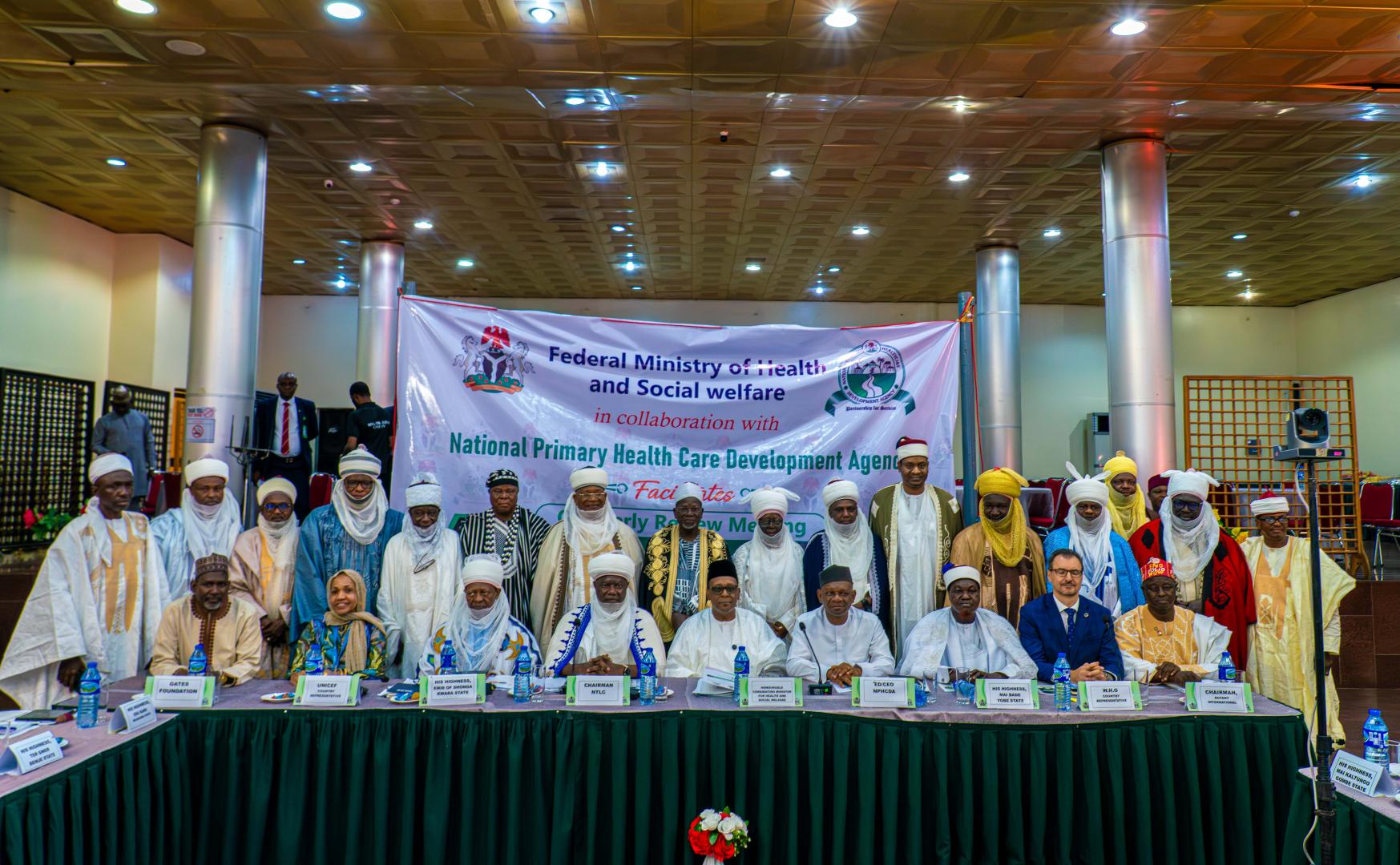
This message shaped discussions at the second quarter review meeting of the Northern Traditional Leaders Committee in Abuja. The meeting brought together traditional leaders, the Federal Ministry of Health and Social Welfare, the National Primary Health Care Development Agency, World Health Organization (WHO), UNICEF, Rotary International, the Gates Foundation and other partners.
Nigeria has made important progress, but gaps remain. With an estimated 8 million births each year, about 2.1 million children have not received any routine vaccine. National routine immunization coverage among children aged 12 to 23 months is estimated at 57%, while coverage in northern Nigeria is lower at 41.5%.
These figures point to an equity concern. Children in remote, insecure or underserved communities are more likely to miss vaccines. Many of them live in areas where families face barriers such as distance from health facilities, misinformation, conflict, poverty or lack of regular outreach services.
Women, especially mothers and caregivers, play a central role in vaccination decisions, making community engagement essential.
Surveillance gaps also remain. According to the weekly national polio statistics report for w